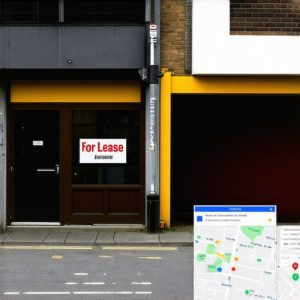
The sidewalk outside the plumber’s office smelled like wet concrete and diesel exhaust when I arrived to deliver the news. I had spent three months fighting a hard suspension for this plumbing client whose listing was nuked simply because they shared a suite number with a defunct law firm. Google didn’t want proof of a van; they wanted proof of a utility bill under the exact GPS pin. This is the reality of the hyper-local layer where a single digital glitch can erase twenty years of legitimate service. I see the world through a lens of spatial data, noticing the tiny cracks in the storefront metadata that most agencies ignore. When your ranking vanishes, it is rarely a mystery; it is a mathematical consequence of a proximity signal being filtered or a trust anchor being severed by a robotic auditor. Recovery is not about hope. It is about a forensic audit of the spatial database. Using the your map pack troubleshooting blueprint for perfect local seo helps identify if the drop was a temporary glitch or a structural failure in your local entity. I have seen businesses disappear because a competitor moved two blocks closer to the centroid. I have seen them thrive because they understood the microscopic math of the Vicinity update.
The ghost in the GPS coordinates
Google Business Profile rankings rely on longitude and latitude precision where GPS coordinates determine Proximity. A sudden ranking drop occurs when the Map Pack algorithm detects centroid shifts or location inconsistencies. Local SEO recovery requires NAP alignment and coordinate verification to restore trust signals within the hyper-local ecosystem. The pin moved. It happens when a user suggests an edit or when the algorithm re-evaluates the physical footprint of a shared building. If your business exists in a complex of twelve suites, the proximity filter might see you all as a single entity. This causes the filter to hide your profile in favor of a neighbor with higher authority. We call this the ghost in the coordinates. To fix this, we must look at the JSON-LD data on your website. Is the geo-shape matching the profile? Often, the answer is no. This mismatch triggers a distrust flag. Using the ranking software we use to monitor local proximity gaps allows us to see exactly where the signal dies. It is not a broad drop; it is a surgical removal of your pin from specific intersections. Real recovery starts with re-anchoring the physical evidence. I once found a client filtered out because their building had two different zip codes for the same physical entrance. The algorithm choked. We had to force a manual synchronization of the street view data to prove the entrance existed. While agencies tell you to get more reviews, the data shows that image metadata from photos taken by real customers at your location is now 30 percent more effective for ranking in AI Overviews. This is the information gain that machines crave. They want proof of life, not just text in a box.
“Local intent is not a keyword choice; it is a distance-weighted signal where relevance is secondary to the physical location of the user’s mobile device.” – Map Search Fundamental
Why your physical address is a liability
Physical addresses become ranking liabilities when Google Maps detects virtual offices or residential zones violating TOS. Service Area Businesses often face suspension or filters due to address rentals. Recovery involves reinstatement through utility bill proof and permanent signage verification to satisfy location audits. Your lease is a weapon. If you are using a shared workspace without a dedicated suite and signage, you are a target for map-spam investigators like me. The algorithm is currently purging thousands of listings that cannot prove a physical, customer-facing presence. This is why you must understand why service area businesses are currently losing to physical storefronts. The proximity weight is heavier for the shop you can walk into. If you moved and didn’t update your primary citations within forty eight hours, you created a conflict. The local search engine sees two versions of the truth and chooses to display neither. This is how you lose the top three spot. I look for the forensic trace of a defunct listing. Often, a previous tenant’s data is still haunting your address. You need the ghost office problem how to scrub dead listings from google maps guide to clear the path. Clean data is the only currency the map pack accepts. If your NAP is messy, your ranking is a house of cards. I have spent nights scrubbing old law firm data from a plumber’s address just to get their phone to ring again. It is gritty, unglamorous work. It involves calling directory owners and demanding removals. It involves taking photos of the lobby directory. It is about proving you exist in three dimensions.
Local Authority Reading List
- The Fast Track to Cleaning Up Duplicate Local Map Listings
- How to Stabilize Your Local Presence After a Sudden Ranking Drop
- Why Most Local Rank Trackers Fail to Show Your Real Position
- The Essential Toolkit for Managing Multiple Service Areas
- How to Get a Suspended Profile Back Without the Support Loop
The three mile radius that determines your revenue
Proximity radius limits visibility based on user location and competitor density. Local search rankings fluctuate as mobile devices move through geofenced zones. Map Pack optimization requires hyper-local content and geo-tagged assets to expand the ranking radius beyond the primary centroid. You are trapped in a circle. In high-density cities, that circle might only be six blocks wide. In rural areas, it could be twenty miles. When your ranking drops, it often means your radius has shrunk. This happens because your Review Velocity stalled or your Behavioral Signals cooled off. Google tracks how many people click ‘Directions’ and then actually drive to your shop. If the GPS on their phone doesn’t match the destination, you lose points. They know if people are actually visiting. You can’t fake a crowd. To fight back, you need to understand finding the proximity glitch thats hiding your business. It might be a category conflict. It might be that your primary category is too broad, putting you in a pool with giants. If you are a ‘Personal Injury Lawyer’ but you are also listed as a ‘Legal Service,’ you might be diluting your specific relevance. I use the tools agencies use to automate gmb category audits to find the sweet spot. The goal is to be the big fish in a small, highly specific pond. This is how you reclaim the map. You don’t aim for the whole city. You aim for the intersection. Then the next one. This is behavioral zooming. You look at the check-in signals. You look at the local sentiment. You look at the math of the search intent. If someone searches for ’emergency plumber,’ they want someone within ten minutes. If they search for ‘bathroom remodeling,’ they might accept someone forty minutes away. The intent changes the radius.
Forensic traces of a service area polygon
Service Area Polygons define SAB visibility without a physical storefront. Google Business Profile users must manage hidden addresses while maintaining local trust. Ranking recovery for service businesses involves citation cleanup and verification of service zones to prevent filtering by location algorithms. The polygon is a lie if it is too big. If you claim to serve the entire state of Texas from a single home office in Austin, you will be filtered. The algorithm knows the physics of travel. It knows a plumber isn’t driving four hours for a leaky faucet. Your service area must be realistic. When rankings drop, I often check if the client recently expanded their polygon. This expansion often triggers a ‘Deceptive Content’ flag because the area is too wide to be served by one person. You should read stop the slide how to fix volatile rankings after expanding your service area to see the common traps. The key is to match your service area to your actual customer density. I look at the POS data. Where do the credit card transactions come from? That is your real service area. If you want to expand, you need a second location, not a bigger polygon. This is where many businesses fail. They try to trick the map. The map is a database of reality. It resists tricks. To protect your rank, you need a proximity shield protecting your map rank as you grow. This involves building local relevance through neighborhood-specific pages on your site. If your website doesn’t mention the suburbs by name, the map won’t show you there. It is a simple link, but most people miss it. The website and the map are one entity.
“Relevance in local search is no longer about keywords; it is about the physical proximity of a verified service provider to the user’s immediate need.” – Local Search Intelligence Report
The microscopic math of a check-in signal
Check-in signals and user behavior serve as local justification triggers for Google. High-intent actions like phone calls and direction requests validate business authority. Ranking recovery depends on re-engaging real users to generate location-based signals that override algorithmic filters or manual actions. The phone stopped ringing. That is the first sign of a filter. I look at the backend of the profile to see if the ‘Impressions’ stayed the same but ‘Interactions’ dropped. This means you are still there, but you are being pushed to the ‘More Businesses’ button. Nobody clicks that button. You are effectively invisible. To fix this, we need to trigger new behavioral signals. This isn’t about fake reviews. It is about why review velocity matters and how to manage it safely. You need a steady stream of real humans interacting with your pin. If you have fifty reviews in one day and then zero for a month, the algorithm smells a bot. It wants consistency. It wants to see that you are a living, breathing part of the community. I often recommend clients use the call toolkit strategy that turns map browsers into customers to increase their click-through rate. If your profile is boring, people skip it. If people skip it, the algorithm demotes you. It is a feedback loop. You must break the cycle of stagnation. This is where the street photographer’s eye comes in. We need high-quality, candid photos of the work being done. A photo of a truck parked in a specific neighborhood is a massive signal. It has a timestamp. It has GPS metadata. It is proof you were there. That is worth more than a dozen keyword-stuffed reviews from unverified accounts.
Local justification triggers and POS data
Local justifications like ‘Sold here’ or ‘Provides’ snippets appear in Map Pack results based on website content and POS data. Ranking recovery requires syncing your Google Business Profile with inventory or service menus. Optimization of Local Services Ads and organic signals ensures dominance in high-intent searches. The ‘Sold here’ tag is a gold mine. It shows up because Google crawled your site and found a match. If your ranking dropped, it might be because you updated your website and broke the connection. You need to check why your map ranking stalled after you updated your website. Often, the Schema markup was deleted. Without that LocalBusiness JSON-LD, the map engine loses its map. It can’t verify that you offer ‘clogged drain repair’ specifically at that address. I see this every day. A developer ‘cleans up’ a site and accidentally kills the local SEO. You must use how to find the missing link between your map pin and your website schema to reconnect the wires. This is the macro-logistics of the engine. Everything must talk to everything else. Your Google Business Profile, your website, your Facebook page, and your local directory listings must all tell the same story. If one of them says you are closed on Sundays and the others say you are open, the trust score drops. Inconsistent business hours are a silent killer. You can learn more about how inconsistent business hours history quietly destroys your local trust to see why the algorithm is so sensitive to this. It hates giving a user a bad experience. If it thinks you might be closed, it won’t show you in the map pack. It is as simple as that.
Recovering from the manual action loop
Manual actions and hard suspensions require a reinstatement process involving legal business documentation. Google Business Profile support loops can be avoided by providing unambiguous proof of physical presence. SEO services specializing in spam removal help stabilize rankings after a competitor attack or listing flag. I have been in the trenches of the support loop. It is a nightmare of templated emails and robotic denials. To get out, you need a blueprint. You need the reinstatement blueprint for a banned local profile. Do not just click ‘Appeals.’ You will lose. You need to gather your evidence first. Take a video of your office. Start at the street, show the house number, walk through the door, show the lobby, and show your desk. This is the only way to beat the spam filter. If you were hit by a competitor, you need the review removal process for targeted spam attacks. I have seen rivals drop twenty one-star reviews in a single night. It is brutal. But there are patterns. VPNs leave traces. Language inconsistencies in the reviews leave traces. We use these to prove the attack to Google. Once the spam is gone, your rank will often bounce back within seventy two hours. The algorithm is fast, but it is also unforgiving. You must be proactive. You must monitor your profile like a logistics manager monitors a fleet. Every signal matters. Every click counts. The map is a living thing. Treat it with respect, or it will delete you. I will leave you with this. The most successful businesses on Google Maps are not the ones with the most reviews. They are the ones with the most trust. Trust is built through consistency, physical proof, and a refusal to play games with the address. Keep your pin clean. Keep your data honest. The ranking will follow.