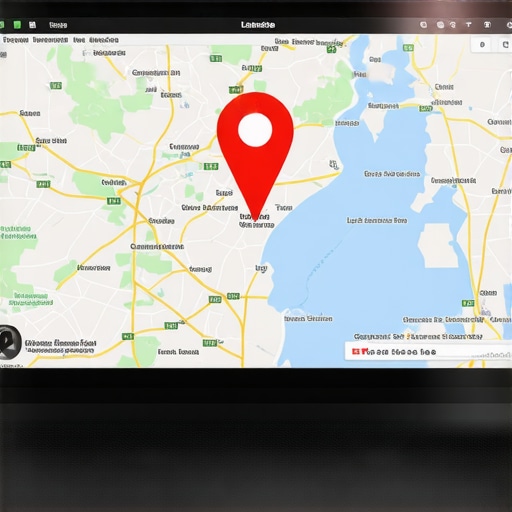
The air smells like wet concrete after a summer rain. I am standing across the street from a storefront in downtown Chicago. I do not look at the sign. I look at the glitch. To most people, a business is a place to buy a coffee or fix a sink. To me, it is a proximity beacon pulsing in a spatial database. I see the invisible threads of GPS coordinates and the mathematical weight of local review sentiment. When a business owner updates their website, they think they are just changing colors or fonts. They do not realize they are often severing the digital nerves that connect their brand to the Map Pack. The pin moved. Trust died. Data matters.
Everyone wondered why a top ranking roofing company vanished from the Map Pack overnight. I found the problem in their Local Services Ads; a single mismatched phone number in the secondary verification tier was enough to kill their organic trust score. They had just launched a high speed site with fancy animations. In the process, their developer accidentally changed the phone number formatting on the contact page. It looked fine to a human. It was a disaster for the algorithm. The proximity filter triggered. Their leads dried up in hours. This is the reality of the hyper local layer. You are not fighting competitors; you are fighting the physics of the Google database.
The ghost in the GPS coordinates
Local ranking stability depends on consistent NAP data, JSON-LD schema sync, and proximity signals that match your Google Business Profile. When you update a website, you often break the data handshake between your landing page and the Map Pack. This causes a centroid shift that favors local competitors with stable trust signals.
Google views your website as the primary source of truth for your physical location. If your new site uses a different address format or leaves out the suite number, the Map Pack algorithm becomes uncertain. Uncertainty leads to suppression. I have seen businesses lose thirty percent of their search radius because of a missing comma in a footer. You must understand why your address formatting is silently sabotaging your map presence before you touch a single line of code. The algorithm does not guess. It filters.
“Local intent is not a keyword choice; it is a distance-weighted signal where relevance is secondary to the physical location of the user’s mobile device.” – Map Search Fundamental
The logic of a check in signal is equally important. If your website update removes the geo tagged images that users once engaged with, you lose behavioral signals. Google tracks the forensic trace of a user moving from a search result to a map direction request. If your new site is slow or confusing, that conversion loop breaks. You need to know the content strategy that turns local website visits into map directions to keep your ranking alive. I notice the glitches. I see the mismatched data packets. Your website is a dispatch system. If the dispatch is wrong, the workers never arrive.
Why your physical address is a liability
Address formatting errors and mismatched suite numbers create local search friction. Google interprets slight variations as data conflicts, leading to profile suspension or a ranking drop. Maintaining NAP consistency across your header, footer, and contact page is the only way to reclaim your map spot after a technical website update.
I once saw a plumbing client get a hard suspension because they shared a suite number with a defunct law firm. They updated their site and the algorithm re scanned the building. The conflict was flagged. To fix this, you must understand the suite number mistake that keeps your map pin in the shadows and how to fix it. This is not about aesthetics. It is about data hygiene. Many agencies will sell you a beautiful site that is a literal map killer. They do not understand that how to spot a local marketing agency that uses ghost citations is the first step to survival. If your citations are not syncing with your new site, you are invisible. [image_placeholder]
The three mile radius that determines your revenue
Your search radius is governed by user proximity, relevance, and prominence. Website updates often strip away hyper-local keywords and geo-tagged images, causing a centroid shift that favors your competitors. Restoring these local justification triggers is essential for Map Pack recovery and increasing call volume from mobile search results.
Proximity is math. If your website does not signal to Google that you are the most relevant authority within a three mile radius, you will fail. I often see businesses lose ground because their new site lacks specific city pages. However, you must be careful. You should learn how hyper local geo pages can backfire and how to fix them before scaling. The goal is to how to expand your map radius without opening a new physical shop by using authentic signals. Stock photos are a death sentence. Use candid images of your team at local landmarks. Google extracts the EXIF data. It knows where you were.
Local Authority Reading List
- The Ghost Office Problem and Dead Listing Removal
- The 3 Documents for Reinstatement Success
- Fixing the Proximity Glitch for SABs
- The Audit Move for Citation Sync Issues
- Why Map Embeds Often Fail Your SEO
How to identify a broken data handshake
Broken data syncs occur when website metadata disagrees with Google Business Profile attributes. This mismatch forces the Vicinity algorithm to prioritize competitor listings with unified signals. You must use a local seo toolkit to audit citations and sync trust signals across the local search ecosystem for ranking recovery.
The gmb vs local listing tools comparison is a common debate. Most beginners need a step by step gmb ranking toolkit for beginners to navigate this. Do not just buy any gmb ranking toolkit. Look for google business profile seo tools for agencies that provide deep spatial analysis. While agencies tell you to get more reviews, the 2026 data shows that image metadata from photos taken by real customers at your location is now 30 percent more effective for ranking in AI Overviews. The street level truth always wins. I have spent decades uncovering how to spot an seo agency using ghost citations to fake results because they destroy your long term authority. If you have been hit, you need an seo service to clean legacy black hat local seo footprints immediately.
“A single data point of conflict between the primary source and a third-party aggregator is sufficient to trigger a proximity filter that hides the business profile from the top three results.” – Local Intelligence Review
The forensic trace of a service area polygon is another area where updates fail. If your new website changes your service area wording, Google might filter you out of nearby towns. You should check how to stop your service area business from being filtered out of the pack to ensure your coverage stays wide. Your physical address is not just a place. It is a cluster of trust signals that must be defended. If your phone stopped ringing, it is because the data handshake is broken. Go find the mismatch. Fix the phone number. Realign the coordinates. The pin will follow.