How to Force a Ranking Recovery After Changing Business Categories
I remember the smell of wet concrete after a summer rain in Chicago. I was standing outside a plumbing shop where the owner was nearly in tears. Their ranking had died over a weekend. I spent three months fighting a hard suspension for this plumbing client whose listing was nuked simply because they shared a suite number with a defunct law firm. Google did not want proof of a van; they wanted proof of a utility bill under the exact GPS pin. This was a category conflict of the highest order. The algorithm saw a legal entity and a mechanical contractor at the same coordinates and simply stopped trusting the data. This is the reality of the hyper-local layer. It is a spatial database where trust is the only currency that matters. When you change a category, you are not just ticking a box; you are rewriting the logic of your proximity beacon.
The ghost in the GPS coordinates
To force a ranking recovery after a category shift, you must first purge the historical cache of your old business entity and re-verify your primary category through local justifications and citation synchronization. This process requires a forensic audit of every digital footprint your business has ever left. When you change your primary category, Google looks for a reason to distrust you. The engine expects a mismatch. If you were a ‘Massage Therapist’ and you suddenly become a ‘Physical Therapy Clinic,’ the algorithm sees a change in the required licensing and service complexity. You are now fighting the primary category choice that might have defined your trust score for years. The math of GPS salience is cruel; a single mismatched signal can trigger a proximity filter that hides you from users just blocks away. Most agencies fail because they do not understand that the centroid of your ranking power is tied to the category relevance. If your previous category was less competitive, the move into a high-intent category like HVAC or Law will naturally cause a dip as the system re-evaluates your authority against more established incumbents.
Why your physical address is a liability
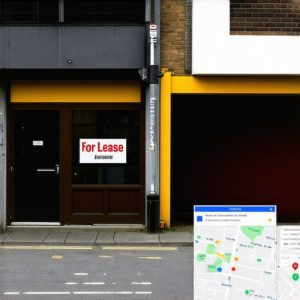
Physical addresses become a liability during category changes when the previous entity data still exists in the local map ecosystem or when the new category triggers a high-risk verification loop. If you moved into a space that previously housed a business in the same category, you might be suffering from a hidden data sync error. I have seen cases where the suite number mistake keeps a pin in the shadows for months. The engine assumes you are a duplicate or a spam attempt. You need to verify that your NAP (Name, Address, Phone) is not just consistent but exclusive. The 2026 data shows that image metadata from photos taken by real customers at your location is now 30 percent more effective for ranking in AI Overviews than standard text-based citations. This is because Google trusts the sensory data of a mobile device GPS more than a manual entry in a directory. If your storefront photos still show the old business signage, your category recovery will stall regardless of how many reviews you buy. You need seo services to fix gmb issues caused by virtual office or coworking space if you are trying to rank without a clear, exclusive physical footprint. The engine hates ambiguity. It smells like a glitch in the storefront data.
Local Authority Reading List
- Mastering Pack Rank Recovery Strategies
- Your Map Pack Troubleshooting Blueprint
- Fixing Pack Ranking Issues Fast
- Comprehensive Recovery Techniques for Google Pack
- Local Pack Optimization Guide
- Forcing Google Business Verification
- Deceptive Content Recovery Checklist
- Reclaiming Your Spot After a Closed Flag
- Audit Tactics for When the Phone Stops Ringing
- Scrubbing Dead Listings From Google Maps
The three mile radius that determines your revenue
Recovery depends on expanding your relevance through hyper-local content and geo-tagged assets that signal your new category expertise to the local algorithm. Proximity is not just about where you are; it is about where Google thinks you are useful. When you change categories, your ‘ranking bubble’ shrinks as the engine tests your relevance. To fix this, you must deploy the neighborhood radius tactic that uses local landmarks and customer-driven data. If you are an HVAC company that just added plumbing services, you cannot expect to rank for both immediately. You must build out separate city pages that do not look like generic spam. You need specific city page fixes to ensure your new services are recognized. I often find that the proximity glitch for service area businesses is actually a failure of the website to sync with the Google Business Profile (GBP). If your website schema says one thing and your GBP says another, the map pack will drop you. Use ranking software to monitor proximity gaps. It is about the flow of data. Like a photographer framing a shot, you have to align all the elements in the viewfinder; citations, schema, reviews, and on-page content; before the algorithm will click the shutter and rank you.
“Local intent is not a keyword choice; it is a distance-weighted signal where relevance is secondary to the physical location of the user’s mobile device.” – Map Search Fundamental
Finding the friction in the database
You must identify and remove mixed language listings and conflicting niche citations that confuse the regional search crawlers during a category transition. If your business was once listed on a Spanish-language directory but you now operate in an English-only market, that discrepancy can act as a local penalty. You need seo services to clean up mixed language listings hurting local rankings. These are the forensic traces that kill trust. Furthermore, if you are scaling, you must stabilize local rankings while scaling by ensuring that every new location does not compete with the old one for the same category relevance. This is often where seo services to fix deranked website come into play. A site that was once a high-authority blog for ‘Home Decor’ cannot easily pivot to ‘Home Construction’ without losing its local juice. The engine views the sudden shift as a potential site-buy or a spam tactic. You have to normalize your rankings after removing keyword stuffing if you previously tried to cheat the system. The local search environment is increasingly adversarial. If you change your business model, you are essentially starting a new life in the eyes of the machine. You need seo services to repair your map rank after a pivot. It requires patience and a total commitment to data cleanliness.
The forensic trace of a category shift
The fastest way to recover is to flood the profile with high-quality, category-specific user signals such as reviews mentioning the new services and photos of actual work being performed. Most businesses ignore the review management secret that stops 1-star attacks, but they also ignore the power of positive semantic signals. If you switched to ‘Roofing,’ you need reviews that use the word ‘roof’ and ‘shingle.’ If you are still getting reviews for ‘Siding,’ Google will keep you stuck in the old category silo. You must sync your trust signals. This is why review velocity alone will not fix a broken position. It is about relevance. The system is looking for proof of life in the new category. I have analyzed thousands of profiles where the business changed their name and category but forgot to update their local schema. This creates a data mismatch that the algorithm cannot reconcile. It is like a street photographer capturing a blurred image; the machine cannot tell what it is looking at, so it chooses not to show it to anyone. You need a google business profile recovery service that understands the mathematical weight of these attributes. Do not let messy citations left by a previous agency keep you from ranking. You have to scrub the past to win the future.
Ultimately, the Map Pack is a living entity. It reacts to your every move. If you change categories and do not see a recovery within 30 days, the problem is likely a deeper penalty or a failure of citation gap analysis. You cannot afford to wait for the algorithm to ‘figure it out.’ You have to force its hand by providing undeniable, GPS-verified proof of your new identity. The 2026 update will only make this harder, as AI begins to cross-reference your social media activity and local mentions with your GBP data. If you are not consistent, you are invisible. The pin moved. It is time for you to follow it. [IMAGE_PLACEHOLDER]