The centroid collapse that killed a roofing giant
Review velocity is a secondary signal that cannot override a fundamental breakdown in proximity data or a mismatch in core entity verification. Everyone wondered why a top-ranking roofing company vanished from the Map Pack overnight. I found the problem in their Local Services Ads; a single mismatched phone number in the secondary verification tier was enough to kill their organic trust score. The company had five hundred perfect reviews, but their coordinate salience had drifted because of a data conflict between their dispatch software and their primary business profile. The algorithm does not care about your five star rating if it cannot verify your physical existence within the expected search radius. I spent weeks untangling the web of conflicting signals. It was a forensic nightmare. We had to scrub every digital trace of that old secondary number before the map pin would settle back into the top three. This is the reality of the modern local algorithm. It is a spatial database first and a reputation engine second. If your technical foundation is cracked, reviews are just expensive wallpaper on a condemned building.
The math of GPS coordinate salience
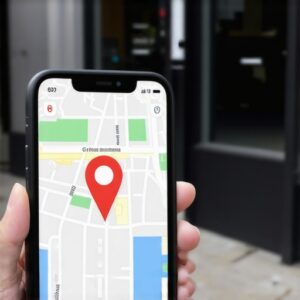
Local relevance is determined by the mathematical distance between a users mobile device and the centroid of your verified business entity. When a user stands on a street corner and searches for a service, Google calculates a proximity score based on high precision GPS data. If your business has a suite number error or a ghost pin from a previous tenant, your salience score drops. This is why the suite number mistake that keeps your map pin in the shadows is such a common killer of local traffic. The system sees the shared address and applies a filter to prevent map clutter. You might have the most reviews in the city, but if you are filtered out of the display, nobody sees them. The algorithm uses a process called deduplication. It looks for businesses in the same category occupying the same physical space. If your data is not distinct, you are invisible. This is not about keywords. This is about the physics of the map. You must ensure your latitudinal and longitudinal coordinates are locked in across all primary data aggregators. Any drift in this data creates a friction point that lowers your ranking probability.
The hidden signals that actually trigger a local pack ranking boost
Beyond basic contact information, the algorithm tracks behavioral signals like directions requests and dwell time to verify your business relevance. Most business owners obsess over the text of a review, but the real weight often comes from the metadata attached to the user action. When a customer takes a photo at your shop, the EXIF data contains GPS stamps. Google uses this to confirm that your business actually exists at that location. This is one of the 4-hidden signals that actually trigger a local pack ranking boost in a competitive market. The search engine is looking for proof of life. It wants to see that people are actually traveling to your pin. If you have a high review velocity but zero people are requesting directions to your shop, the system flags the reviews as suspicious. It assumes you are buying fake engagement from a farm. The logistics of the map pack require a balance between digital mentions and physical movements. If the two do not match, your ranking will stall regardless of your star rating.
“Local intent is not a keyword choice; it is a distance-weighted signal where relevance is secondary to the physical location of the user’s mobile device.” – Map Search Fundamental
Why your physical address is a liability
A physical storefront can become a ranking anchor if the surrounding area is saturated with competitors or if your address is associated with historical map spam. Many businesses suffer because they moved into a building that previously hosted a suspended profile. The ghost of that suspension clings to the address. You need local seo services for cleaning historic citation spam campaigns if you want to clear the air. Google maintains a memory of every business that has occupied a set of coordinates. If the previous tenant was a lead generation scam, your new legitimate business will face higher scrutiny. Your review velocity might be high, but the address trust score is low. You are fighting an uphill battle against an algorithm that remembers every violation. This is why some new listings never gain traction. They are built on toxic land. You have to prove to the system that the new entity is separate and compliant. This involves submitting utility bills, photos of permanent signage, and even video walk-throughs to reset the trust level of the physical location.
Local Authority Reading List
- Comprehensive Fixes for Pack Problems
- Audit Tactics for Dropped Calls
- Software Moves for Search Intent
- Spotting Ghost Citation Scams
- Reclaiming the Top 3 Spot
The three mile radius that determines your revenue
Your ranking power decays exponentially as the user moves away from your business centroid, creating a hard limit on your visibility. This is the vicinity filter. You can be number one when someone is standing in your parking lot and number twenty when they are three miles away. To fix this, you must understand how to expand your map radius without opening a new physical shop through proximity relevance. This is achieved by creating local content that mentions specific neighborhoods and landmarks. It is not about stuffing keywords. It is about signaling to Google that your service area is broader than your street. Reviews from customers in those outlying neighborhoods are worth three times as much as reviews from people who live next door. The algorithm sees the zip code of the reviewer and expands your radius accordingly. If all your reviews come from a single block, your map presence will stay trapped on that block. You need a geographic spread of engagement to force the map pack to show you to a wider audience.
The ghost in the GPS coordinates
Incorrectly mapped pins and mismatched coordinates between your website and your business profile create a data conflict that lowers your ranking ceiling. I have seen businesses lose half their traffic because their website schema used different coordinates than their Google Business Profile. This is why why your local schema often fails to sync with your map listing and kills your momentum. The search engine needs to see a perfect match. Any discrepancy suggests that the information is unreliable. If the engine cannot trust your location, it will not recommend you. You need to use best local seo tools for google business profile to audit your data sync. Check your JSON-LD code. Ensure the latitude and longitude are precise to six decimal places. This level of detail tells the algorithm that you are a professional entity with high data integrity. It is the digital equivalent of having a clean, well lit storefront. It invites trust from both the machine and the user. Without this sync, your review count is irrelevant because you have failed the basic verification test.
Why service area businesses are currently losing to physical storefronts
The 2026 algorithm update heavily favors businesses with a verifiable physical presence over those that hide their address. If you are a plumber or an electrician running a service area business, you are at a natural disadvantage. You must know how to stop your service area business from being filtered out of the pack by emphasizing your local licensing and physical fleet. Google is cracking down on lead gen sites that use fake addresses. As a result, legitimate service area businesses are getting caught in the crossfire. Your reviews help, but they cannot replace the trust signal of a physical office. You need to provide more evidence of your local operations. This includes photos of your branded vans, team members in uniform, and local project sites. The system is looking for a physical footprint even if you do not have a showroom. If you hide your address, you must work twice as hard to build proximity relevance through localized content and niche citations. This is the only way to level the playing field against storefront competitors.
The audit toolkit that catches ranking gaps your agency missed
Most agencies use surface level tools that fail to track how your map position changes across different city blocks. A single rank report is a lie. You need a grid search to see the truth. Using the audit toolkit that catches ranking gaps your agency missed will reveal that you are only ranking in a tiny circle around your office. This is a common realization for business owners who wonder why their phone stopped ringing despite high review scores. The reviews are working, but the map radius has shrunk. You need to identify the specific blocks where your competitors are winning. Often, it is because they have a local link from a neighborhood association or a mention on a hyper-local blog. These signals move the pin. Use 5 local tools that reveal why your business is missing from search results to find these gaps. Once you see where the data is weak, you can target your content strategy to reclaim those specific neighborhoods. It is a tactical war for every square inch of the map.
The specific profile tweaks that beat proximity filters
Adjusting your primary category and refining your service list can sometimes bypass the proximity filters that are hiding your listing. Many businesses choose a category that is too broad, putting them in direct competition with national chains. If you want to win, you need the specific profile tweaks that beat proximity filters in a crowded market. This might mean switching from General Contractor to Kitchen Remodeler. The narrower category has a different centroid calculation. You might find that you rank much better for the specific service even if the volume is lower. The quality of the leads will be higher. Also, ensure your service menu is populated with unique descriptions. Do not use the same boilerplate text as everyone else. Mention specific local regulations or building codes. This signals to the AI that you are an expert in that specific geography. The algorithm rewards specificity. It wants to give the user the most relevant local answer, not just the business with the most reviews.
How to repair your map rank after a pivot in business services
Changing your primary business focus without updating your citation network causes a data mismatch that can tank your map visibility for months. If you used to be a carpet cleaner and now you do water restoration, your old mentions are sabotaging your new ones. You must learn how to repair your map rank after a pivot in business services by auditing every single directory. The search engine sees the old category on Yelp or Yellow Pages and gets confused. It lowers your ranking because it is not sure what you actually do. This is why fixing the messy citations left behind by your previous agency is the first step in any recovery. You have to force a new consensus across the web. This takes time and a lot of manual outreach. You cannot just buy a new citation pack. You have to kill the old data. Once the web agrees on your new service, your reviews will finally start to move the needle again. Until then, you are just shouting into a storm of conflicting information.