The air smells like wet concrete and ozone after a morning storm in the industrial district. I am staring at a computer screen that shows a red bar. It says your business is suspended for deceptive content. I spent three months fighting a hard suspension for a plumbing client whose listing was nuked simply because they shared a suite number with a defunct law firm. Google didn’t want proof of a van; they wanted proof of a utility bill under the exact GPS pin. The algorithm does not care about your intentions. It cares about data alignment. If you are reading this, your business has vanished. You are losing money every hour. The ghost in the GPS coordinates has finally caught up with you. Recovery is not about begging for help. It is about a forensic audit of every digital footprint you have left over the last five years.
A deceptive content flag means Google no longer trusts your physical existence. To fix this, you must audit your primary category, verify your physical signage, and ensure your utility bills match your dashboard exactly. If you recently moved or changed your phone number, the mismatch triggered a trust filter that requires a manual reinstatement request with legal documentation.
The ghost in the GPS coordinates
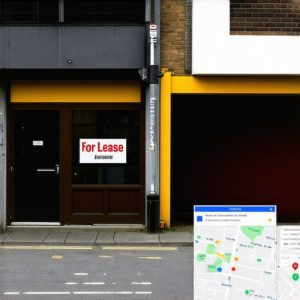
The mathematical salience of your business location is determined by more than just an address. Google looks at the Wi-Fi BSSID signals surrounding your shop. It looks at the height of your building in street view. When you get a deceptive content flag, it often means the entity metadata does not match the physical reality of the street. I have seen listings die because the street view car saw a ‘For Lease’ sign that the owner forgot to take down. This is the microscopic reality of local search. You might be interested in what to do when your business pin suddenly vanishes from local search to understand the initial shock.
“Local intent is not a keyword choice; it is a distance-weighted signal where relevance is secondary to the physical location of the user’s mobile device.” – Map Search Fundamental
Why your physical address is a liability
Your address is a liability if it is not unique. Shared office spaces are a graveyard for local rankings. If you are in a coworking space, you are likely being filtered out. Google wants to see a dedicated entrance and permanent signage. The algorithm uses image recognition to scan photos for your logo on the door. If it sees a generic glass wall, you are a high-risk entity. You should explore how shared office spaces are silently killing your local pack visibility before you sign your next lease. The pin must be exact. A three-inch shift on the map can move you from the top 3 to page ten.
The forensic trace of a service area
If you do not have a storefront, you are a Service Area Business. Google is currently aggressive against these listings. They suspect you are a lead-gen site. To survive, you must define a tight polygon. Do not select the entire state. Select the specific zip codes where your trucks actually go. If your website mentions cities you do not serve, the spam filter will catch you. This is why many service area businesses are being filtered out of the pack lately. You must prove your nexus. Use job photos with geotags. Upload them to the profile. This provides the information gain Google needs to verify your activity.
Forensic evidence for the spam team
When you submit your reinstatement appeal, do not send a screenshot of your website. Send a scan of your business license. Send a utility bill from a major provider like Comcast or National Grid. Google trusts these more than your word. The bill must match the name and address on your profile to the letter. Even a missing suite number will cause a rejection. Many people fail because of one tiny address error that tanks your local map visibility without them even knowing it. You are in a war of documentation.
Local Authority Reading List
- Mastering Pack Rank Recovery
- Map Pack Troubleshooting Blueprint
- Comprehensive Fixes for Pack Problems
- Strategic Moves to Reclaim Your Map Spot
- Fixing the Proximity Glitch
The three mile radius that determines your revenue
Proximity is the strongest ranking factor in 2026. If a customer is four miles away, you might not exist to them. This is the distance trap. Google prefers a weaker business that is closer to the user over a stronger business that is far away. You can fight this by building local signals. Mention specific intersections on your service pages. Link to the local high school or the neighborhood park. If you don’t do this, you might fall into the distance trap where your ranking is high but your calls are zero.
Reclaiming the map after a ranking slide
Once you are reinstated, the work is not over. You have been in the penalty box. Your rankings will be suppressed for a few weeks while the algorithm re-indexes your data. You need a jumpstart. Use a gmb audit and ranking toolkit to find the gaps your competitors are exploiting. Most people ignore their image metadata. Real customers taking photos at your location is a massive ranking signal. It proves you are a real place where real people go.
“A deceptive content flag is often the result of an entity mismatch between the primary category and the physical reality of the storefront as interpreted by street view depth sensors.” – Search Quality Evaluator Note
The audit tactics to find out why your phone stopped ringing
You need to look at your citations. If your business is listed on a random directory from 2012 with an old phone number, it is poisoning your current profile. Google syncs this data constantly. A single mismatched phone number can trigger a re-verification loop. Use the audit tactics to find out exactly why your phone stopped ringing and fix the data sync issues. Consistency is the only currency in Local SEO.
Multi location businesses and the proximity zoom
If you have ten locations, you have ten times the risk. One bad manager keyword-stuffing a name can get the whole account flagged. You need a centralized local seo toolkit for multi location businesses to maintain order. Do not use the same description for every shop. Mention the specific neighborhood. Mention the unique staff at that branch. Google hates duplicate content across profiles. It looks like a doorway network.
Why your map position stalled despite updates
You are posting to your profile every day, but nothing is happening. This is common. Google is filtering your posts because they look like ads. Stop using stock photos. Stop using calls to action that sound like a late-night infomercial. Use raw, unedited photos of your work. This is the only way to avoid the spam filter for profile posts. The algorithm wants to see authenticity. It wants to see the grit of a real business.
The simple step to reclaim your top 3 spot
Sometimes, the fix is technical. Your website schema might be broken. If your JSON-LD doesn’t match your GMB, the system gets confused. It chooses the path of least resistance, which is to rank your competitor. You should learn the simple step to reclaim your top 3 spot by aligning your structured data. It is the bridge between your website and the map pack.
Fixing the silent reporting errors
Your rank tracker says you are number one. Your phone is silent. This is because your rank tracker is checking from a static IP address. It is not seeing what a mobile user sees on the street. You need to understand why your rank tracker is lying about your actual map position. Real users are moving. They are at different intersections. You need a grid-based audit to see the truth.
The review management secret that stops attacks
Competitors use bots to trigger deceptive content flags. They leave five fake reviews in ten minutes, then report you for spam. You must monitor your review velocity. If you see a spike, report it immediately to Google before they suspend you. Knowing the review management secret that stops 1-star attacks is vital for long-term survival. Protective measures are better than recovery measures.
The exact reason your website is stuck in the local filter
Your website content must support your map listing. If your homepage is generic, you won’t rank for local terms. You need city pages that aren’t spam. You need to avoid making your city pages look like generic spam. Mention local landmarks. Mention the climate. Mention why your service is specific to that area. This creates the local relevance Google craves. The recovery process is painful. It requires patience and a fanatical attention to detail. But when that red bar turns green and your pin reappears, the phone starts ringing again. That is the only metric that matters.