The ghost in the GPS coordinates
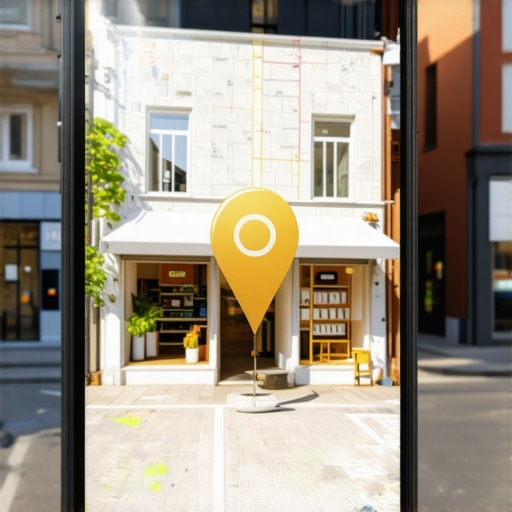
The sidewalk outside the office smells like wet concrete after a summer rain. I stand there with a camera, looking at a storefront that says one thing on the glass and another on the map. To the casual observer, it is just a sign. To me, it is a data mismatch waiting to trigger a suspension. The algorithm does not care about your marketing copy. It cares about the forensic trace of your physical existence. When you try to force relevance by stuffing keywords into a business name, you are not optimized. You are loud. And in the world of spatial databases, being loud without authority is the fastest way to get filtered into the void.
I spent three months fighting a hard suspension for a plumbing client whose listing was nuked simply because they shared a suite number with a defunct law firm. Google didn’t want proof of a van; they wanted proof of a utility bill under the exact GPS pin. This is the reality of the hyper-local layer. It is a game of millimeters and mathematical trust. If you want to rank, you stop thinking about keywords and start thinking about the proximity beacon you are broadcasting to the network.
The math of the three mile radius
Local pack visibility relies on proximity, relevance, and prominence signals. Most businesses fail because of proximity glitches or mismatched data across the ecosystem. Fixing these issues requires technical SEO services to fix indexing and crawling issues and a deep audit of the business entity structure within the local search graph.
Proximity is the most stubborn variable in the local equation. You cannot move your building, but you can change how Google perceives the distance between your pin and the user. Every mobile device acts as a moving sensor. When a user searches for a service, Google calculates the distance-weighted signal from the device to the business centroid. If your address data is messy, that calculation fails. We see this often when companies undergo an address change and lose their ranking almost instantly. You need 7 fixes for mismatched business info stalling your growth to ensure the transfer of authority happens without a total collapse of your map position.
The algorithm uses a logic known as the vicinity filter. This filter suppresses listings that are too close to one another in the same category to prevent a single entity from dominating the pack. If you are sharing a building with a competitor, you are fighting a ghost. You must prove your distinct entity through unique behavioral signals, such as customer check-ins and distinct photo metadata. This is why finding the proximity glitch thats hiding your business is more valuable than any keyword-rich title. The system looks for the mathematical weight of your location, not the words you wrote in the description.
“Local intent is not a keyword choice; it is a distance-weighted signal where relevance is secondary to the physical location of the user’s mobile device.” – Map Search Fundamental
Why your physical address is a liability
A business address becomes a liability when it is tied to historic spam or shared with multiple entities. Cleaning up these footprints is essential for long term ranking. Expert local seo services to fix nap inconsistencies ensure that every mention of your name, address, and phone number is mathematically identical across the web.
I have seen listings die because of a single comma in the wrong place. Google’s crawlers are looking for patterns. When they find an old address from five years ago on a forgotten directory, it creates a trust gap. This gap tells the algorithm that your business might not be where you say it is. This uncertainty is a ranking killer. Many agencies promise results but fail because they ignore the silent ranking killers old addresses and ghost pins that haunt your profile. It is a forensic cleanup job, not a creative writing project.
The issue becomes even more complex for service area businesses. If you hide your address, you are telling Google you have no physical storefront. This shifts the ranking logic from a point-source radius to a service area polygon. If that polygon overlaps with too many competitors who have physical offices, you will be filtered out. Understanding why your service business is getting filtered out of maps is the first step toward reclaiming your territory. You are not fighting for keywords; you are fighting for the right to exist in a specific geographic coordinate.
Local Authority Reading List
- Local Pack Optimization Guide
- Fixing Service Area Glitches
- GMB Audit Checklist
- Restoring Banned Listings
The catastrophe of the category shift
Changing your primary category can destroy your visibility if the underlying website content does not support the new classification. To recover, you need seo services to recover gmb visibility after category change. This process involves aligning your technical site structure with the specific trust signals Google requires for that new niche.
Categories are the primary filters of the map pack. If you pick the wrong one, you are invisible. If you change it without preparation, you are suspicious. I watched a high-ranking contractor switch from General Contractor to Roofer and disappear for six months. The reason was simple. Their website still talked about kitchen remodels more than shingles. Google saw the category change as a potential spam attempt. You must follow the exact steps to force a ranking recovery after changing business categories to avoid this trap.
The algorithm performs a cross-reference check between your profile and your indexed web pages. If there is a mismatch, the profile is demoted. It is about semantic consistency. This is why why manual gmb category audits beat automated suggestions every time. Automated tools don’t see the nuance of your local market. They don’t see that in your city, the top performers are all using a secondary category you haven’t even considered. It is a game of observation. Look at the storefronts. Look at the data. See the glitch before it becomes a penalty.
“Relevance is determined by the intersection of user intent and the verified attributes of a business entity as stored in the knowledge graph.” – Google Search Research
The forensic trace of customer behavior
Customer behavior signals like review sentiment and image metadata are now more powerful than traditional keywords. Using a gmb audit and ranking toolkit helps identify gaps in these behavioral signals. Real photos taken by customers at your location provide GPS-verified proof of your business activity.
Keywords in reviews used to be the gold standard. Now, Google looks at the device that left the review. Was that device actually at your location? If not, the review has less weight. This is why why your review velocity isnt fixing a broken map position if those reviews are coming from people who never stepped foot in your shop. The algorithm is smarter than the agencies selling review blasts. It tracks the physical flow of people. It sees the crowd.
Image metadata is the new secret weapon. When a customer takes a photo at your business, that photo contains coordinates. When they upload it to your profile, they are giving Google the ultimate proof of your location. This is far more effective for ranking in AI Overviews than any amount of keyword stuffing. We focus on the toolkit that actually pushes your google business profile higher by leveraging these organic signals. Stop writing for the machine and start making the machine see what is actually happening on the ground. The street doesn’t lie.
Professional Troubleshooting Resources
- Multi-Location Cleanup Services
- Fixing Ghost Listings
- Uncovering Competitor Map Spam
- Rebuilding After Suspensions
Restoring trust after the lead gen mess
Restoring trust requires a complete audit of your digital footprint to remove any associations with spammy lead generation tactics. You need seo services to rebuild trust after spammy lead gen listings. This involves purging historic citations and building a new foundation of verified local authority signals.
Lead generation listings have poisoned the well for many legitimate businesses. If you bought a listing or used a virtual office in the past, you are likely flagged in the system. Even if you have moved to a real office, that old association lingers like the smell of wet pavement. You need the trust restoration checklist for flagged local businesses to scrub that data clean. Google has a long memory. It remembers every phone number and every suite that was ever associated with a spam network.
We use the hidden footprints cleaning up old black hat tactics strategy to find these links. It is a slow process of proving your legitimacy one document at a time. The goal is to move from a state of suspicion to a state of authority. When the algorithm sees that your data is consistent, your photos are real, and your customers are actually visiting your location, the rankings return. It is not about the keywords you add. It is about the noise you remove. [image_placeholder_1]