Why Local Link Building Often Fails to Increase Your Map Radius
I’ve seen it a thousand times: a business owner or a frustrated SEO lead comes to us at Fix My Pack Rank after spending thousands of dollars on “high-authority” backlinks, yet their Google Map Pack visibility is still stuck in a tiny, two-mile radius around their office. They’ve followed the standard playbook, bought the DA 50+ guest posts, and secured the niche edits, but when they pull a 19-mile scan, they are met with a sea of red. Why? Because google business profile seo is not the same as traditional organic SEO. While organic search relies heavily on authority and content, the Map Pack operates on a completely different set of physics – specifically the triad of Proximity, Relevance, and Prominence.
In the world of local search, we are currently seeing a massive shift. Google is weighting proximity more than keywords in recent updates, leading to “random dips” for businesses that previously dominated their entire city. If you’re building links like it’s 2015, you’re not just wasting money; you might be reinforcing a “radius-lock” that keeps your business invisible to customers just a few blocks away. In this guide, I’m going to break down why your link-building strategy is likely failing and how to actually move your pin in the real world.
The “Backlink Trap”: Why Authority Doesn’t Equal Distance
The most common mistake I see is the “Authority Fallacy.” Many SEOs believe that if they get a link from a high-authority national blog or a major news outlet, Google will naturally assume the business is “important” enough to show to everyone in the metropolitan area. This is a fundamental misunderstanding of the “radius-lock” algorithm. Google uses category-specific radius filters that are highly sensitive to the nature of the business. For example, a personal injury lawyer has a much larger natural search radius than a coffee shop. You can’t “authority” your way out of a coffee shop’s three-block radius if Google’s data says people don’t travel further than that for a latte.
When you build a link from a national site, it provides “Domain Authority,” but it provides zero “Geographic Relevance.” Google looks at these links and sees that people across the country are talking about you, but it doesn’t see anyone in your neighborhood talking about you. In fact, over-optimizing for high-DA, non-local links can create a profile that looks unnatural for a local service provider. We call this The Backlink Trap: Why Certain Links Can Actually Shrink Your Search Radius. If your link profile is 90% national and 10% local, Google’s Neural Matching starts to doubt your physical relevance to the immediate area, often resulting in your rankings being pinned even tighter to your physical address.
To truly rank google business profile assets, you must understand that Google is looking for “Local Prominence.” This isn’t just about who has the most links; it’s about who is the most significant entity within a specific geographic boundary. If your links aren’t anchored in local reality, they won’t help you break through the proximity filter.
The Proximity Glitch: When Google Ignores Your Power
Have you ever noticed that your business ranks #1 when you’re standing in your parking lot, but drops to #15 the moment you drive two miles down the road? This is the “Proximity Glitch.” In recent years, Google has tightened the proximity filter to such a degree that it often borders on a shadowban for businesses outside a 2-3 mile radius. Even if you have the best reviews and the most optimized website, Google’s algorithm might decide that a closer, less-qualified competitor is a “better” result simply because they are 500 feet closer to the user.
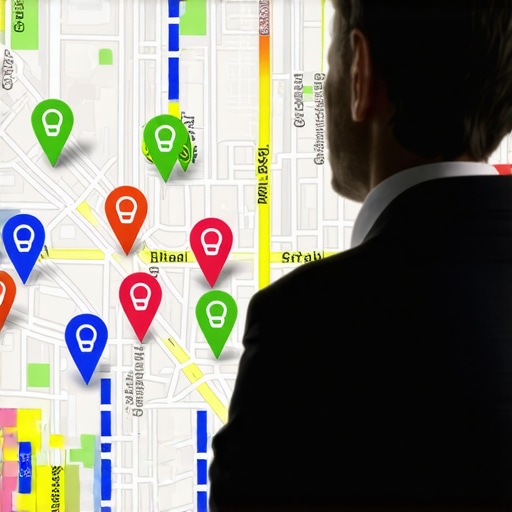
This is where advanced google maps ranking service providers differentiate themselves. We don’t just look at a single ranking point; we use heatmaps to identify “dead zones.” Advanced practitioners using local seo tools often find that even with a 19-mile radius scan, the “top 3” visibility is often much tighter than expected due to this proximity weighting. If you find yourself hitting a wall where your rankings simply won’t expand, you are likely dealing with a proximity filter that requires a specific type of “Geographic Signal” to break.
Breaking this glitch isn’t about more links; it’s about troubleshooting the specific data points Google is using to draw that circle around you. Whether it’s inconsistent NAP (Name, Address, Phone) data or a lack of local entity signals, you need a surgical approach. Check out our guide on 4 Map Pack Troubleshooting Fixes for 2026 Proximity Glitches to see how we handle these “stuck” profiles.
Why Niche Citations Outperform “High DA” General Links
In the race to improve google maps ranking, many agencies fall into the trap of quantity. They’ll sell you a package of 300 “citations.” Most of these are what I call “Ghost Citations” – low-quality, automated directory listings on sites that no human has visited since 2012. These carry almost no weight in the modern local map pack seo landscape. In fact, if the data on these sites is even slightly inconsistent, they can do more harm than good by confusing Google’s understanding of your location.
Contrast this with hyper-local, niche-specific links. A single link from a local Little League sponsorship, a neighborhood association blog, or a local chamber of commerce is worth more than a hundred generic directory listings. Why? Because these links provide “Geographic Prominence.” They prove to Google that you are an active participant in the local economy. Research shows that category-specific competition is a major factor; if your competitors all have links from local trade organizations and you only have links from “Best SEO Directory,” you’re going to lose the relevance battle every time.
We’ve found that Why Niche Citations Are Fixing Stalled Map Rankings Faster Than General Links is a core truth of 2026 SEO. When Google sees your brand mentioned in the context of your city and your specific industry simultaneously, it builds a “Local Entity” bridge that allows your ranking radius to expand beyond the standard proximity filter.
The Website-Map Disconnect: The Silent Ranking Killer
You can build the best local seo backlinks in the world, but if your website doesn’t “talk” to your Google Business Profile, those links are going into a black hole. This is the “Website-Map Disconnect.” Google uses your website as the primary data source to verify the claims made on your GBP. If your website schema is outdated, or if your city pages look like generic, AI-generated spam, Google will lose confidence in your geographic relevance.
A major issue we see is the “City Page Spam” tactic. SEOs create 50 pages for 50 different suburbs, all with the exact same content, just swapping out the city name. Google’s Neural Matching is now smart enough to see right through this. These pages don’t provide value; they provide a footprint of manipulation. To Google, these look like “doorway pages,” and they can actually cause your main Map Pack listing to be suppressed. If you want to expand your radius, your city pages need to be “Hyper-Local.” This means including local landmarks, neighborhood-specific advice, and embedded maps that show your relationship to that specific area.
To avoid this, you must learn How to Stop Your City Pages From Looking Like Generic Spam to Google. Without a solid technical foundation on your site, link building is just putting a Ferrari engine in a lawnmower – it’s not going anywhere.
3 Strategic Moves to Actually Expand Your Ranking Radius
If you want to break the “radius-lock” and truly rank google business profile listings across a wide area, you need to move beyond standard link building. Here are three strategies we use at Fix My Pack Rank to move the needle:
1. Hyper-Local Geo-Pages (Done Right)
Instead of generic city pages, create pages that serve as a resource for the local community. Mention local landmarks, cross-streets, and even other local businesses (that aren’t competitors). This creates a “Geographic Cluster” of keywords that tells Google exactly where you operate. However, be warned: if these pages aren’t linked correctly within your site architecture, they won’t pass any “link juice” to your GBP.
2. User-Generated Geographic Content
One of the most powerful signals for google business profile optimization is having your customers mention city and neighborhood names in their reviews. When a customer writes, “The best plumber in [Neighborhood Name],” Google associates your business with that specific micro-location. This is “Brand Mention” research in action – people talking about the brand and describing experiences is often more effective for radius expansion than a generic backlink. Encourage your team to ask customers to mention their suburb in their feedback.
3. Local Entity Stacking
Using google business profile optimization techniques, you can link your business entity to established local landmarks. This involves using “SameAs” schema and strategic linking to Wikipedia entries or official city pages for local landmarks. By “stacking” your entity on top of a known geographic landmark, you are essentially telling Google, “I am the most prominent service provider near this famous location.” This is a key part of our The Hyper-Local Link Tactics That Actually Move Your Map Pin strategy.
By implementing these moves, you aren’t just chasing “authority” – you are building a fortress of local relevance that the proximity filter cannot ignore.
Conclusion: Stop Chasing Links, Start Building Local Prominence
The era of “buying your way” to the top of the Map Pack with generic backlinks is over. In 2026, google business profile seo is about proving you are the most prominent and relevant option in a specific area. If your rankings are stuck, it’s likely because your link profile lacks geographic density, your website is disconnected from your map data, or you’ve fallen victim to the proximity glitch.
You need to stop treating the Map Pack like a smaller version of organic search. It requires a specialized approach that respects the unique algorithm of Proximity, Relevance, and Prominence. If you’re tired of seeing your competitors dominate the map while you’re stuck in a two-mile circle, it’s time to audit your strategy. I recommend using local seo software to get a clear picture of where you actually stand across your entire service area.
Don’t let your business be invisible to the thousands of people searching for your services just outside your current radius. Audit your proximity, fix your technical disconnects, and start building links that actually matter to a local algorithm. If you need help diagnosing your “radius-lock” or want a custom recovery strategy, contact us at Fix My Pack Rank today. Let’s move your pin to where it belongs.