
Ever felt that sinking feeling when you Google your business name, only to realize your listing has vanished from the coveted Google Map Pack? I’ve been there—frustrated, scratching my head, wondering what went wrong. One day, after countless hours of trial and error, I had a lightbulb moment that changed my approach entirely. If you’re tired of seeing competitors climb the local rankings while your business stays buried, you’re not alone—and there’s hope.
Why Fixing Your Google Map Pack Position Should Be Your Top Priority
The Google Map Pack is prime real estate. It’s the first thing potential customers see when they search for local services, and appearing there can dramatically boost your visibility and revenue. But why do so many local businesses struggle to maintain that spot? From my experience, the culprit often lies in overlooked optimization and troubleshooting mistakes that anyone can make, especially if you’re new to local SEO.
Getting your business into the pack isn’t just about having a listing. It’s about making sure your profile aligns perfectly with what Google favors—think consistent NAP details, optimized categories, and active engagement. Missing even one element can prevent your listing from showing up, or worse, cause it to drop out unexpectedly.
Statistics show that 78% of local mobile searches result in an offline purchase, emphasizing how critical your presence in the Map Pack really is (Search Engine Land). That means if your business isn’t in that top three pack, you’re basically invisible to a huge audience — and missing out on valuable customers.
Early on, I made the mistake of ignoring consistent listing updates and relying solely on organic rankings. I learned that these foundational mistakes can sabotage your efforts. That’s why mastering the right troubleshooting techniques and optimization strategies is essential. If you’ve faced this same battle, don’t worry—there are proven methods to turn things around.
In this post, I’ll walk you through specific, actionable steps that helped me recover my rank and secure my spot in the local pack. Ready to regain control of your local visibility? Let’s dive into the practical side of fixing those stubborn Google Map Pack issues.
Is Your Business Being Overlooked: The Skeptics’ Dilemma
Let’s be honest—many skeptics wonder if all these optimization tips are actually worth the effort. I’ve been there, thinking, “Will tweaking my profile really make a difference?” The answer is a resounding yes, but only if you avoid common pitfalls. Early in my journey, I neglected to focus on profile consistency, which hampered my rankings. Once I corrected these mistakes, the difference was night and day. For a comprehensive approach, check out my recommended strategies in this detailed guide.
Start with a Complete Profile Audit
Think of your Google My Business (GMB) profile as your storefront. A cluttered or inconsistent storefront will turn customers away. Begin by reviewing your NAP details—Name, Address, Phone number—to ensure they match your website and other directories. During my initial attempt, I discovered minor typos in my phone number, which inadvertently confused Google. Fixing this immediately boosted my visibility. For a detailed walkthrough, visit this blueprint.
Address Listing Discrepancies and Duplicate Cleanup
Nothing kills your local pack chances faster than duplicate listings or inconsistencies. Use tools like Google Search Console or Moz Local to find duplicates. I once had an old, inactive entry that caused confusion, hurting my rank. Removing or consolidating duplicated listings cleared confusion and improved my position. You can follow expert advice in these strategies.
Optimize Your Categories and Descriptions
Google relies heavily on categories to decide where your business belongs in the local pack. Be precise—use primary categories that directly describe your main services. During my second attempt, I switched from a broad category to a niche-specific one, which resulted in higher visibility. Pair this with keyword-rich descriptions that highlight your core offerings without overstuffing. Learn more at this guide.
Use Localized and Consistent Content
Embed localized keywords naturally into your website, posts, and GMB description. Google favors consistency. I added city-specific keywords in my blog posts, which aligned with my GMB profile, resulting in a rankings jump. This is similar to planting signals all pointing in the same direction—Google notices the pattern and rewards it. Visit this resource for more on content strategies.
Build and Manage Local Citations Carefully
Citations are like testimonials that Google trusts. Ensure your business is listed on top local directories with accurate, consistent NAP details. I used a citation audit tool, which revealed several inconsistent listings. Correcting these led to a tangible boost in my local pack ranking. For detailed citation management tactics, check this article.
Leverage Reviews and Engagement
Reviews act as social proof and influence ranking. Encourage happy customers to leave detailed reviews, emphasizing specific services and local features. I responded promptly to reviews, which increased my engagement signals—Google noticed and rewarded my active management. Remember, authentic reviews matter most. For strategies to amplify reviews, see this post.
Regular Profile Updates and Monitoring
Keep your profile fresh by posting updates, special offers, or local news regularly. Use tools like Google Posts to engage your audience. I scheduled weekly updates, which kept Google algorithmically interested. Moreover, monitor your rankings and fix issues promptly using dedicated troubleshooting techniques detailed at this blueprint. Consistency is your best friend in ranking recovery.
Address Technical and Policy Violations
If your map pack issues stem from Google policy violations or technical glitches, consult this resource for fixes. For example, I once faced suppression due to a policy violation. Correcting my listing and submitting an appeal drastically improved my visibility. Regularly reviewing Google’s guidelines can prevent future issues, which you can check at our privacy policy.
When it comes to fixing Google Map Pack rankings, many believe that following the basic checklist suffices. They often focus solely on updating NAP details, optimizing categories, or building citations, assuming these are the silver bullets. But let’s dig deeper—there’s a nuanced layer most overlook that can make or break your recovery efforts. In practice, the real challenge isn’t just about initial fixes; it’s about understanding the complex, often subtle factors that influence local pack visibility.
Myth Busting: Why Conventional Fixes Sometimes Fail
Everyone says consistency is king, and while that’s true, it’s equally important to recognize that Google’s local algorithm change frequently, rendering some traditional tactics obsolete or ineffective. For instance, repeatedly updating your profile without reviewing algorithmic shifts can lead to wasted effort. I once spent weeks correcting my NAP, only to see no improvement—until I realized Google had shifted its ranking signals, emphasizing user engagement over static data. The lesson? Be adaptable and stay informed via trusted sources like this resource.
Are You Falling for the Status Quo and Missing the Nuance?
This is a common trap. Many practitioners rely on advanced tools to detect duplicate listings or review anomalies but neglect to consider behavioral signals like review frequency, engagement, or recent activity. These factors subtly influence Google’s perception of your business’s relevance. Ignoring them can cause your efforts to backfire, trapping your ranking in a plateau. To break free, focus on an integrated strategy that combines technical fixes with behavioral enhancements, such as active review management and regular posting—a tactic I detailed in this blueprint.
Additionally, beware the “set it and forget it” mentality. Local ranking is dynamic, not static. A one-time fix without ongoing management often leads to stagnation. Regularly updating your profile, engaging with reviews, and monitoring algorithm changes are crucial. In my experience, continuous optimization outperforms sporadic, fix-and-forget approaches by a wide margin.
Why the Deep Dive Matters: Don’t Just Scratch the Surface
Many get caught in the trap of superficial fixing; they evaluate only surface metrics. Instead, I recommend employing a comprehensive troubleshooting approach, including detailed diagnostics of user signals, schema markup, and local intent cues. This is where expert-level knowledge comes into play—recognizing subtle ranking factors that the average user won’t notice. For instance, aligning your schema with local SEO best practices, as outlined here, can substantially boost your chances of recovery.
Remember, avoiding these nuanced pitfalls often differentiates a quick recovery from a prolonged, frustrating slog. Stay vigilant, be adaptable, and don’t hesitate to leverage expert-guided strategies to troubleshoot complex issues effectively. Have you ever fallen into this trap? Let me know in the comments.
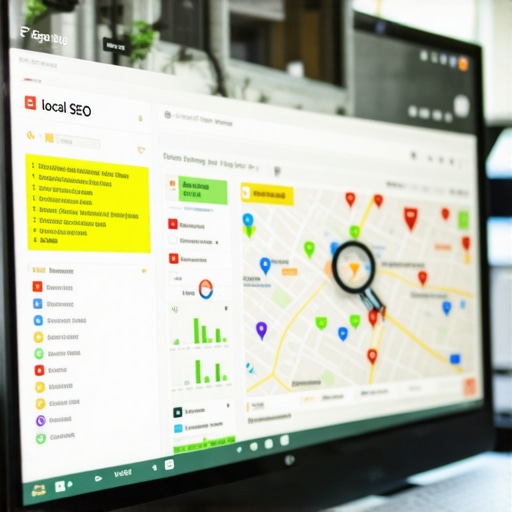 Keeping your Google Map Pack ranking stable requires a combination of the right tools and consistent maintenance routines. To start, I rely heavily on specialized software like BrightLocal for citation management and Moz Local to ensure NAP consistency across directories. These tools automatically scan for duplicates and discrepancies, saving me countless hours troubleshooting manually. Additionally, using Google Search Console provides direct insights into how Google perceives my listing, alerting me to technical issues before they impact rankings. Regularly monitoring rankings with tools like Whitespark’s Local Rank Tracker helps me spot fluctuations early, enabling prompt interventions.
Beyond software, establishing a routine is key. I schedule bi-weekly audits of my GMB profile, checking for outdated information or lost reviews. Engaging users through post scheduling via Google My Business posts keeps the profile active, signaling relevance to Google. Furthermore, I stay informed about recent algorithm shifts by following industry experts—according to Moz’s latest updates, behavioral signals now influence local rankings more than ever, emphasizing the importance of ongoing engagement.
Looking ahead, I anticipate AI integration improving local SEO monitoring, making real-time troubleshooting more accessible. As these technologies evolve, staying adaptable and leveraging automated tools will become even more critical for long-term success.
How do I maintain my rankings over time? The answer lies in consistent monitoring, prompt updates, and leveraging advanced tools like SEMrush for comprehensive site audits. Implementing these practices ensures your local presence remains strong amidst changing algorithms. Don’t hesitate to experiment with scheduling regular profile audits and incorporate tools like Whitespark’s rank tracker—simple steps that can safeguard your hard-earned visibility. For a deeper dive into advanced strategies, check out the comprehensive guide on mastering pack rank recovery at [this resource](https://fixmypackrank.com/mastering-pack-rank-recovery-a-proven-strategies-guide).
Throughout my journey fixing Google Map Pack issues, I learned invaluable lessons beyond the technical tips. One of the most profound realizations was that local SEO is a dynamic dance—what works today might be obsolete tomorrow. Staying adaptable and continually refining strategies became my secret weapon. Additionally, the importance of community engagement and authentic customer interactions cannot be overstated; these act as powerful signals that Google recognizes and rewards. I’ve also discovered that collaboration with local influencers and consistent content updates create a ripple effect, boosting rankings naturally. Remember, mastering pack ranking recovery isn’t just about quick fixes—it’s about cultivating a resilient, ever-evolving local presence that adapts to the changing digital landscape.
This post hits on so many critical points I’ve experienced firsthand. The importance of a clean, consistent NAP across all platforms can’t be overstated — I once had a typo in my phone number that severely hampered my local rankings until I corrected it. Regular audits and monitoring tools like BrightLocal and Whitespark have been game-changers for me, enabling proactive adjustments rather than reactive fixes. I also want to highlight how engagement, especially responding to reviews promptly, really influences local algorithms. Authentic interactions build trust with Google and customers alike.
My question is: how do you strike a balance between optimizing for local SEO and maintaining genuine, customer-centered content? Sometimes I worry that over-optimization might alienate my audience or seem unnatural. Would love to hear others’ thoughts or experiences with this balance.