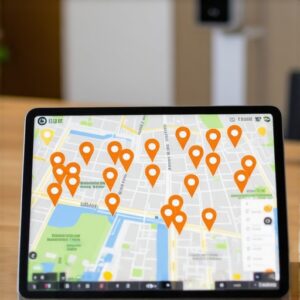
A business listing is not a mere profile. It is a Proximity Beacon in a complex spatial database where every decimal point in a GPS coordinate holds mathematical weight. I have spent twenty years in the hyper-local layer, investigating map spam and decoding the logic of centroid theory. I have seen countless merchants vanish from the Map Pack because they treated their Google Business Profile like a social media page rather than a forensic record of physical existence. When you change your business model, you are not just updating a description; you are recalibrating the distance-weighted signals that Google uses to justify your presence to a user. This recalibration is often the moment the algorithm decides you are no longer a trusted local entity. Small shifts in how you operate can trigger a catastrophic loss of impressions because the local justifications that once anchored your pin have been severed.
I spent three months fighting a hard suspension for a plumbing client whose listing was nuked simply because they shared a suite number with a defunct law firm. Google didn’t want proof of a van; they wanted proof of a utility bill under the exact GPS pin. This client had recently pivoted from a service area model to a physical showroom. That single change in the business model, intended to grow the brand, signaled a data conflict to the proximity filters. The algorithm saw two different business types at the same set of coordinates and, in its mathematical coldness, chose to hide both. We had to provide three years of tax documents and a video walkthrough of the hallway leading to their specific door just to get the pin back on the map. This is the reality of the local search ecosystem today. If you do not respect the spatial rules, you do not exist.
The pivot trap that erases local rankings
Business model changes trigger a local algorithm shake up because they alter the primary category and NAP consistency required for Map Pack visibility. When you pivot, your geographic relevance is re-evaluated based on new service keywords and proximity signals that may not align with your historical data. This often results in a hard suspension or a total ranking slide.
The local algorithm is a creature of habit. It builds a trust score over years based on your consistent presence at a specific coordinate and your relevance to a specific set of keywords. When you suddenly change from a general contractor to a niche roofing specialist, you are effectively telling the machine that your previous five years of data are irrelevant. The machine responds by pulling you from the top 3 spots to verify your new identity. While you wait, your phone stops ringing. If you are currently in this situation, you need tactics to reclaim the top 3 spot after a core algorithm shift to prove to the system that your entity is still the same trusted beacon. The algorithm does not understand the nuance of business growth; it only understands data parity. If the data from your website, your social signals, and your third-party citations do not match the new model, you are flagged as a risk. The result is a ghosting of your profile where you appear to be live in the dashboard but are invisible on the actual map.
“Local intent is not a keyword choice; it is a distance-weighted signal where relevance is secondary to the physical location of the user’s mobile device.” – Map Search Fundamental
The danger of virtual offices and coworking spaces
Virtual offices and coworking spaces represent a high-risk signal that often leads to a GMB suspension because they lack permanent signage and exclusive physical space. Google’s local filters target these addresses to prevent map spam and ensure users find verifiable businesses at the GPS coordinates listed. Using these spaces often kills your local search radius.
Many agencies suggest using a virtual office to expand your footprint without the cost of a lease. This is a fatal mistake in the 2026 landscape. Google has become adept at identifying the address patterns of Regus, WeWork, and other shared spaces. When the algorithm sees fifty businesses listed at the same suite number, it applies a proximity filter that only allows the most prominent one to show. The rest are relegated to the shadows. If you find your business stuck in this trap, you need the suite number mistake fix to separate your entity from the noise. Changing your model to include these phantom locations often leads to a manual review that most businesses cannot pass. I have seen entire franchises wiped out because they tried to scale using these shortcuts. The only way to survive is to provide proof of exclusive tenancy, which a virtual office cannot provide. The system is designed to reward the merchant who pays a local lease, not the one who rents a mailbox. This is why service area businesses are currently losing to physical storefronts in high-competition niches.
Local Authority Reading List
- The GMB Audit Checklist for Lead Generation
- How to Bypass the Support Loop for Reinstatement
- Profile Tweaks to Beat Proximity Filters
- Expanding Your Radius Safely
- The 5 Point Profile Checklist
The math of GPS coordinate salience
GPS coordinate salience refers to the mathematical precision of your latitude and longitude within the Google Maps database. Even a minor shift in your map pin placement can disrupt your proximity relevance for local search queries. Ensuring your NAP data perfectly matches your spatial coordinates is the only way to maintain Map Pack dominance.
While many focus on keywords, the real battle is won in the decimals. When you change your business model, you often change your service area or your physical location. This affects your centroid. The centroid is the center point of a search query radius. If you move your business even one mile, you are entering a new competitive environment with a different set of neighbors. The specific profile tweaks that beat proximity filters often involve tiny adjustments to how your address is formatted to ensure it snaps to the correct grid point in the map layer. Furthermore, the 2026 data shows that image metadata from photos taken by real customers at your location is now 30 percent more effective for ranking in AI Overviews than standard text updates. This is because the metadata contains a geographic stamp that confirms the business is actually operating at the stated coordinates. If your business model shift means you are no longer taking customers at your site, you lose this high-velocity trust signal. You are no longer a destination; you are just another service provider in a sea of data.
“Local search results are based primarily on relevance, distance, and prominence. These factors are combined to find the best match for your search.” – Google Business Profile Guidelines
The forensic trace of service area polygons
Service area polygons are the digital boundaries you define in your Google Business Profile to show where you provide on-site services. If these polygons overlap with too many competitors or conflict with your verified address, the local algorithm will filter your impression share. Fixing these polygon errors is essential for map ranking recovery.
When a business pivots, they often expand their service area to capture more leads. They draw wide circles around entire counties. This is a signal of desperation to the algorithm. A massive service area often suggests that the business lacks a strong local base. The machine prefers a tight, well-defined polygon that correlates with real customer reviews from those specific neighborhoods. If you have expanded your reach and noticed a drop, you may need to stop the slide by refining your service area. The forensic trace of where your workers actually go, tracked via mobile devices and check-ins, must match the polygon you have drawn. If Google sees your service vehicles are always in one zip code but you claim to serve ten, your trust score will plummet. This is why service area businesses are filtered out of the pack when they try to overreach. The algorithm uses behavioral zooming to see if your claims match the physical reality of your operations. Every check-in and every review from a specific neighborhood acts as a vote of confidence for your presence in that spatial grid.
Mixed language listings and hidden addresses
Mixed language listings create data conflicts in the knowledge graph that cause local search rankings to stall or vanish. When a business profile contains inconsistent language signals or hides its physical address without proper verification, it loses its proximity weight. Cleaning up these listing errors is foundational for recovering impressions.
I have seen businesses try to target multiple demographics by using different languages in their business name or description. This is a violation of terms that almost always results in a ranking penalty. The algorithm sees this as a naming inconsistency. Similarly, when a business hides its address after a model change, it often loses the proximity boost it once enjoyed. If you are struggling with this, the exact steps to fix mixed language errors must be followed to restore your entity’s clarity. Hiding your address is often necessary for service area businesses, but it must be done through the proper dashboard tools, not by simply deleting the text. If done incorrectly, you leave a ghost pin that confuses the system. You need google business profile recovery services that understand how to scrub these historic errors. A clean, single-language, verified listing is the only thing that can survive the constant core updates. The noise of a messy data sync will eventually lead to a total map disappearance. You must ensure that every citation, from the smallest directory to the major aggregators, reflects the exact same model and language. Only then will the proximity filters allow your beacon to shine across the full three-mile radius that determines your revenue.