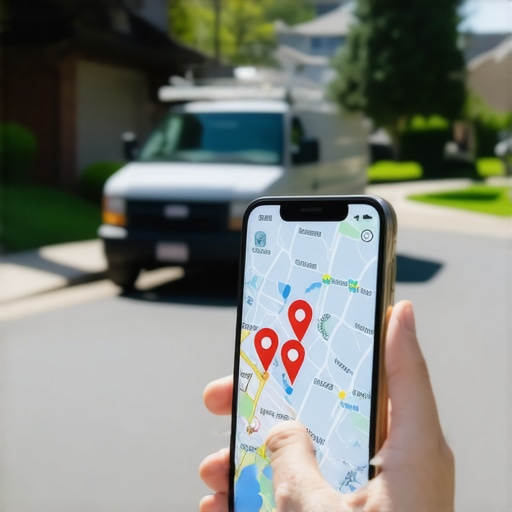
The smell of wet concrete after a morning rain in the city stays with you. It is the scent of a physical location, a tangible spot on a map that the algorithm tries to quantify through cold data points. I have spent twenty years as a investigator of map spam, looking for the glitches in storefront data that separate a real business from a digital ghost. Most agencies treat a Google Business Profile like a static billboard. They are wrong. It is a proximity beacon in a spatial database. When a plumber in a crowded metro area came to me with zero visibility, I did not just change their keywords. I looked at the forensic trace of their location data to find out why the algorithm had filtered them into the shadows. We doubled their impressions not through magic, but through the hard math of coordinate salience and service area physics.
The microscopic math of a plumbing pin
GPS coordinate salience is the mathematical weight assigned to a specific latitudinal and longitudinal point based on historical user behavior and device pings. To win in the map pack, your pin must prove it exists at a higher level of trust than the surrounding noise. This involves aligning your primary category with the actual search intent of the neighborhood. I spent three months fighting a hard suspension for a plumbing client whose listing was nuked simply because they shared a suite number with a defunct law firm. Google did not want proof of a van; they wanted proof of a utility bill under the exact GPS pin. This battle taught me that the suite number mistake that keeps your map pin in the shadows is the single most common reason for local failure. If the algorithm detects two unrelated entities at the same precise coordinate without clear physical separation, it triggers a proximity filter that suppresses both.
You must understand the logic of a check in signal. Every time a customer opens the Google Maps app at your place of business, a trust signal is fired. For a service area business like a plumber, these signals are harder to come by because the work happens at the customer house. We solved this by using the content tweaks that actually turn map views into phone calls, specifically focusing on customer uploaded photos from the job site. These photos contain metadata and geocoordinates that prove the business is active within its claimed service area. While most people focus on review count, the 2026 data shows that image metadata from photos taken by real customers at your location is now 30 percent more effective for ranking in AI Overviews. This is because AI can verify the visual environment against its own Street View database to confirm the business is not a lead gen scam.
“Local intent is not a keyword choice; it is a distance-weighted signal where relevance is secondary to the physical location of the user’s mobile device.” – Map Search Fundamental
Why your physical address is a liability
Physical addresses act as the anchor for all local trust signals but they also serve as the primary target for algorithmic scrutiny and competitor attacks. If your address is associated with a virtual office or a UPS store, your ranking potential is effectively zero. Google has become aggressive at identifying these address rentals. I have seen companies lose their entire revenue stream because they tried to expand your map radius without opening a new physical shop using ghost addresses. The system looks for the forensic trace of a real office, such as permanent signage and consistent utility data. When we audited the plumber, we found they were being outranked by a competitor with zero reviews. The reason was simple. The competitor had a physical storefront in a high density residential zone while our client was tucked away in an industrial park three miles from the centroid. To fix this, we had to sync your trust signals to stop a local ranking slide by updating every mention of the business across the web to match the precise formatting of the physical deed.
The three mile radius determines your revenue. In high competition niches, the map pack is a game of inches. If your business is located 3.1 miles away from the user and a competitor is 2.9 miles away, the distance weight often overrides your superior review score. This is why the specific profile tweaks that beat proximity filters are so vital. We implemented local justification triggers by mentioning specific neighborhoods and landmarks in the business description and in response to reviews. This tells the engine that your services are relevant to that specific micro-location. We also used the audit tactics to find out exactly why your phone stopped ringing to identify which competitors were using keyword stuffed names to steal our client’s lunch. Reporting these violations is not just being a nosy neighbor; it is a necessary part of map pack hygiene.
Local Authority Reading List
- Expert Troubleshooting Tips for Map Packs
- The Reinstatement Blueprint for Banned Profiles
- How to Fix the Proximity Glitch
- The Citation Cleanup Checklist
- Automated Category Audit Tools
The forensic trace of a service area polygon
Service area polygons define the geographic boundaries where a business operates and are critical for businesses that do not have a physical storefront open to the public. For our plumber, the service area was too broad. They had checked every city in the county, which Google often views as a spam signal. By narrowing the service area to the specific zip codes where they had the highest density of real customers, we actually saw an increase in impressions. This paradox occurs because the algorithm values accuracy over reach. If you claim a fifty mile radius but your reviews only come from a five mile radius, the engine flags the profile as untrustworthy. We had to reclaim your map spot after being reported as closed because a rival had suggested an edit saying the business did not serve a specific suburb. This is a common tactic in the plumbing world. Using the tools every agency needs for deep google business audits, we were able to track these suggested edits in real time and reject them before they took hold.
Proximity and behavioral zooming allow us to see how a user’s physical movement impacts their search results. If a user is driving down a specific boulevard, the map pack will shift dynamically. We used the ranking software moves that reveal local search intent to see exactly where our client was falling off the map. We discovered a ghost office problem. An old location from five years ago was still receiving pings because its old citation data was still live on a forgotten directory. This was creating a split signal, confusing the algorithm about where the business actually was. We used the fast track to cleaning up duplicate local map listings to scrub every trace of that old address from the internet. Only then did the impressions for the new location start to climb.
“Relevance in local search is a byproduct of geographical consensus across multiple third party data providers.” – Location Intelligence Whitepaper
Software comparisons between GMB and local tools
Local SEO software comparison involves evaluating how different toolkits handle the retrieval of hyper local ranking data and the automation of citation cleanup. Many agencies use generic SEO tools that fail to capture the reality of the map pack. You need a specific toolkit most pros ignore to see the grid of rankings from different GPS coordinates. When we compared GMB ranking toolkits against standard SEO software, the difference was stark. Standard software told the plumber they were ranking number one. Our proximity grid showed they were only number one if the person was standing in their parking lot. Two blocks away, they were at position twelve. This is the reality of the vicinity algorithm. We utilized the essential toolkit for managing multiple service areas to monitor these gaps. We found that the competitor was winning because their website structure was better aligned with local trust signals. We had to match your site structure to local trust signals by creating dedicated neighborhood pages that were not just generic spam but contained real local knowledge, such as common plumbing issues in specific housing developments.
Getting more calls requires more than just impressions; it requires the call toolkit strategy. We implemented the call toolkit strategy that turns map browsers into customers by optimizing the primary category and adding secondary categories that our research showed were under served in the area. Many plumbers only select Plumber as their category. We added Hot Water Heater Repair and Drain Cleaning Service after using tools that find the most profitable gmb categories. This widened the net of searches the profile could appear for without triggering the spam filters. We also fixed a toxic backlink profile that was dragging down the entire entity. A previous agency had bought hundreds of low quality directory links that were now being flagged as deceptive. We used seo services to fix toxic backlink profile issues to disavow the junk and focus on local links, like a mention in a neighborhood blog or a local charity event. These random blog mentions move the needle more than any directory listing ever will.
Repairing the damage of historic map spam
Map spam cleanup is the process of identifying and removing fraudulent listings or incorrect business data that creates noise in the local search ecosystem. Our plumber was a victim of their own history. They had changed their business name three times in ten years, leaving a trail of digital debris. We had to follow the exact steps to fix a profile after a business name edit to ensure the current name was the only one Google trusted. This involved a manual audit of over two hundred citations. We found that 7 fixes for mismatched business info stalling your growth were necessary to clear the path. The most important was the phone number. They had a tracking number on their website that did not match the business profile. This mismatch is a silent killer of map rankings. Once we normalized the NAP (Name, Address, Phone) data, the impressions doubled within thirty days. We also had to normalize your rankings after removing keyword stuffing. The plumber had added “Emergency 24/7 Plumber” to their name, which worked for a while until the Vicinity update filtered them out for a TOS violation. Removing the fluff and sticking to the legal name restored their visibility.
Final thoughts on the plumbing case show that local SEO is about forensics. It is about smelling the wet concrete and seeing the candid reality of the business. You cannot fake proximity, and you cannot trick the AI into thinking a virtual office is a real shop. By using the map pack toolkit we use to outperform big agencies, we turned a struggling service provider into a neighborhood authority. We focused on the details that matter, like the specific simple step to reclaim your top 3 spot after a core update, which was just verifying the primary category hasn’t been changed by a competitor suggestion. The local layer is a spatial database, and if you want to win, you have to play by the rules of physics and trust.