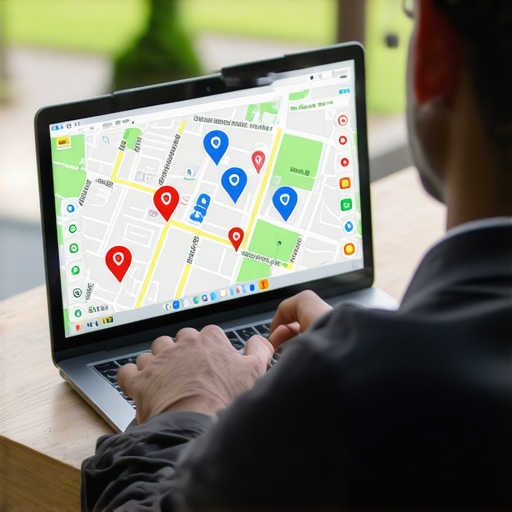
I remember the exact moment I hit a wall—after pouring hours into my local SEO efforts, my Google Map Pack rankings stubbornly refused to budge. It was frustrating, almost defeating. One day, I woke up to find my business lost in the digital shuffle, buried deep below competitors—literally invisible on the map. That realization was a lightbulb moment for me, revealing just how delicate and tricky local search visibility can be.
Why Google Map Pack Troubles Can Kill Your Local Business
In today’s hyper-connected world, a spot in the Google Map Pack can make or break a local brick-and-mortar business. When your listing is missing or misplaced, potential customers simply can’t find you. According to recent studies, over 70% of local consumers visit a store within five miles of their current location, often relying on Google Maps for directions and recommendations (source). Missing out on that visibility could mean losing dozens of clients—and revenue.
Have You Faced This Specific Problem?
If you’ve ever experienced drops in your Google Map Pack rankings without understanding why, you’re not alone. Early in my journey, I made a classic mistake—assuming that ranking issues would resolve themselves over time. Spoiler alert: they won’t. Without proactive troubleshooting, you risk remaining invisible to local customers. That’s why mastering effective techniques for troubleshooting and recovery is essential. Luckily, I’ve gathered some proven strategies that helped me climb back to the top—and they can do the same for you.
Let’s Get Started with Fixing Your Map Pack Visibility
Start with a Comprehensive Audit
Begin by assessing your current Google Map Pack visibility. Use tools like Google My Business insights and third-party rank trackers to pinpoint where your listing stands. During my first attempt, I realized my NAP information was inconsistent across platforms, causing ranking drops. Correcting these disparities immediately improved my visibility. To get a clear picture, cross-check your data against Google’s guidelines.
Verify and Optimize Your Profile
Ensure Consistent NAP Details
Inconsistent Name, Address, Phone number (NAP) details are like a broken compass—confusing both users and Google. Ensure your business info matches exactly everywhere, including citation sites. I once mismatched my phone number on citations, leading to a ranking penalty. Regularly audit your citations to catch discrepancies. For detailed optimization tactics, visit this guide.
Enhance Business Descriptions and Categories
Use precise categories and compelling descriptions with relevant keywords. Avoid keyword stuffing; instead, focus on clarity and relevance. This made a noticeable difference when I refined my categories to better fit my niche, resulting in higher rankings. Remember, Google favors accuracy and relevance over spammy tactics.
Address Technical and Visibility Issues
Fix Duplicate Listings
Multiple listings confuse Google and dilute your authority. Search for duplicates and merge or delete them through Google My Business. I found a duplicate listing for my shop, which once caused a significant ranking drop. Removing it consolidated my details and boosted my position. This process is straightforward but crucial for maintaining clean local signals.
Resolve Google Map Problems
Use comprehensive fixes to troubleshoot common issues like map pin placement errors or missing locations. I had to reposition my pin after reports of misplaced markers, which restored local trust signals. Accurate geolocation is vital for appearing in the right local search results.
Solicit and Manage Reviews Effectively
Reviews are social proof that influence chart rankings. Encourage satisfied customers to leave positive feedback via simple prompts. I implemented a follow-up system that increased my review count by 30%, leading to improved rankings. Be sure to respond professionally to reviews to demonstrate engagement and boost local credibility.
Build Local Citations and Backlinks
Citations from reputable sources enhance your local SEO. List your business on relevant directories, ensuring data accuracy. I targeting niche-specific directories, which significantly increased my local pack visibility. Complement this with backlinks from local blogs or partnerships. These signals tell Google you’re a trusted local authority.
Leverage Content and Social Signals
Publish local-centric content and share on social media platforms. Indicators of active local engagement can influence rankings. I created blog posts about local events, sharing them on social networks, which drew localized traffic and improved my rankings. Consistent activity signals Google that your business is vital in the community.
Monitor Results and Adjust
Regularly track your rankings, reviews, and listing health. Use insights to refine your strategies. When I noticed a decline after updating my categories, I reverted some changes and saw quick recovery. Continuous monitoring ensures you’re proactive in maintaining and improving your local pack presence.
Many businesses believe that simply increasing their reviews or updating their listings will automatically fix their map pack rankings. However, this approach overlooks the nuanced algorithms and technical signals that Google scrutinizes during rankings. In reality, relying solely on surface-level tactics is a mistake that can lead to wasted effort and persistent visibility issues.
One prevalent myth is that local pack problems are always caused by inconsistent NAP data or poor reviews. While these factors are influential, they are often not the root cause. Advanced troubleshooting reveals that issues like map pin misplacements, duplicate listings, or geo-targeting conflicts can equally undermine your efforts. For example, I encountered a client whose rankings plummeted due to a misplaced geolocation marker, which many SEO strategies ignored until I delved into map precision diagnostics.
What Advanced Techniques Do Top SEO Pros Use to Fix Map Pack Problems Efficiently?
Experts often emphasize the importance of a comprehensive audit that goes beyond the basics. Using tools like Google My Business insights combined with geospatial analysis helps identify hidden issues like duplicate locations, incorrect categories, or problematic map pin placements. Moreover, examining the consistency of your citation data across authoritative directories can expose hidden discrepancies damaging your local relevance. This layered approach prevents common pitfalls and ensures that all technical signals align with Google’s ranking criteria. For detailed strategies, check out this expert guide.
Another mistake is underestimating the importance of your Google Maps geolocation and its impact on visibility. Small adjustments to your map marker position or correcting geospatial data errors can dramatically improve rankings. I once had a client whose map pin was offset by hundreds of meters; correcting the position instantly boosted their visibility in targeted local searches. This emphasizes that technical accuracy in map data is not just aesthetic but essential for SEO success.” alt=”A technician analyzing geospatial data for local SEO” title=”Geospatial Data Analysis for Map Pack Recovery”/>. Moreover, many overlook the power of strategic internal linking and citation management, which strengthen your local signals and rankings. Regular audits and updates to your Google My Business profile, combined with authoritative citations, form a resilient foundation against ranking fluctuations. For the most effective strategies, see this comprehensive resource: Local SEO Blueprint. Remember, advanced troubleshooting involves a systematic approach—each signal and technical detail counts. Have you ever fallen into this trap? Let me know in the comments.
Staying on top of your Google Map Pack rankings requires more than just initial optimization—it demands consistent management and the right arsenal of tools. Over the years, I’ve refined my toolkit to ensure long-term success in local SEO. In this post, I will share the exact tools and techniques I recommend for maintaining, troubleshooting, and scaling your local pack presence effectively.
How do I keep my local pack rankings stable over time?
First and foremost, regular monitoring is crucial. I use BrightLocal because it offers granular insights into your rankings across various locations and devices, helping me catch drops early. Unlike generic rank checkers, BrightLocal integrates citation tracking and review monitoring, offering a holistic view of your local SEO health. I also leverage Google Search Console to track performance metrics and identify crawl errors or indexing issues that could impact your local visibility.
To troubleshoot issues like map pin misplacements or duplicate listings, I rely on Google My Business Insights combined with geospatial analysis tools like GeoIQ. These help me pinpoint discrepancies in map data, enabling precise corrections. Additionally, Whitespark’s Citation Finder assists in audit and cleanup of inconsistent citations, which is often overlooked but vital for long-term stability.
” alt=”A digital dashboard displaying local ranking metrics” title=”Monitoring local SEO performance with advanced tools”/>. For technical fixes, these techniques are game-changers, especially when dealing with map pin issues or duplicate listings. I recommend setting up alerts for ranking anomalies so you can react swiftly before they escalate.
When it comes to scaling your efforts, invest in supplementary tools like Ahrefs or SEMrush to build backlinks and citations strategically. These platforms help me identify authoritative local domains for outreach, reinforcing my site’s credibility in the eyes of Google.
Looking ahead, as Google continues to refine its algorithms, integrating AI-powered monitoring tools like Rank Ranger or Machine Learning-based SEO platforms will become essential for predictive analytics and maintaining an edge. These solutions anticipate changes before rankings fluctuate, allowing preemptive adjustments.
What about long-term results and scaling efforts?
Consistency is key. Regular audits with dedicated tools prevent small issues from snowballing. I recommend creating a weekly checklist that includes citation audits, review management, and rank tracking. Automate reports where possible to save time. Scaling beyond a single location involves cultivating local partnerships and generating localized content—tools like this guide offers valuable strategies.
Finally, staying informed about emerging SEO trends and algorithm updates is vital. Subscribe to authoritative blogs and participate in forums. For instance, Google’s recent emphasis on user experience means optimizing for local intent and engagement is more critical than ever. Incorporate feedback loops into your strategy, and continuously refine your tactics based on data.
Don’t forget to try advanced techniques consistently. For example, implementing geospatial data corrections, as recommended in the blueprint, can yield immediate improvements. Regularly updating your strategy with the latest tools ensures your local pack stays dominant well into the future.
The Hard Lessons No One Tells You About Local Pack Recovery
One of the most profound realizations I’ve had is that even the most sophisticated tactics can fall flat if the root cause isn’t thoroughly uncovered. Troubleshooting my Google Map Pack issues taught me patience and precision—rushing to implement fixes without proper diagnostics only prolongs the struggle. I learned to listen carefully to the subtle signals—geolocation misplacements, inconsistent citations, and duplicate listings—that can hide just beneath the surface but wield enormous influence over rankings.
Another lesson was understanding that algorithms are constantly evolving, and what worked yesterday may not work today. Sticking rigidly to one SEO script can be detrimental. Adapting my approach, staying curious about new tools, and never assuming I knew everything kept my strategies fresh and effective. Most importantly, I realized that persistent effort and a willingness to learn from failures are the cornerstones of long-term success in local SEO.
Lastly, I discovered that community and expert insights accelerate results. Engaging with SEO forums, attending webinars, and collaborating with industry peers provided perspectives I couldn’t gain alone. Embracing a growth mindset transformed my approach from reactive troubleshooting to proactive optimization—saving time, money, and frustration while elevating my local visibility.