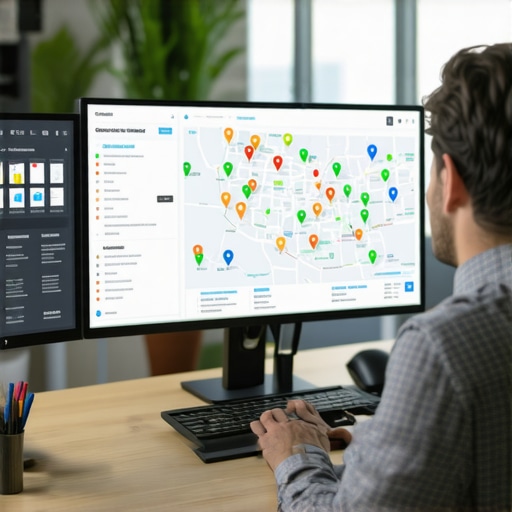
Ever stared at your screen, wondering why your business isn’t showing up in the local Google Map Pack, even after countless tweaks? I’ve been there. One day, I watched my carefully optimized listing vanish from the top results without warning. The frustration was real. I felt like I was throwing darts in the dark, unable to pin down what was going wrong. That lightbulb moment hit me hard—there’s a science behind troubleshooting Google Map Pack issues, and I wasn’t alone in my confusion.
Why Fixing Your Google Map Pack Matters More Than Ever in 2025
In 2025, local search optimization isn’t just a nice-to-have—it’s a necessity. The competition is fierce, and Google’s algorithms are evolving faster than ever. According to recent studies, over 70% of consumers visit a local business within 24 hours of searching online, making your Map Pack ranking crucial for foot traffic and sales. If your business isn’t appearing where it should, you risk losing out to competitors who have mastered the art of troubleshooting and optimization. That’s where I realized that understanding and fixing Map Pack issues can be the game-changer for your local visibility.
But here’s the thing: I made a crucial mistake early on. Instead of digging into the root causes, I kept applying superficial fixes—changing keywords, updating photos—hoping something would stick. It didn’t. That’s why I want to share what I’ve learned, so you don’t waste time spinning your wheels. We’ll dive into proven strategies to identify, troubleshoot, and fix the most common issues that suppress your local pack visibility.
Have You Faced This Frustration?
If you’ve ever felt like your Google Map Pack ranking is a mystery wrapped in an enigma, you’re not alone. Many local business owners struggle with sudden drops or inconsistent visibility, not knowing where to start. Well, you’re in the right place. I’ve compiled the most effective troubleshooting tips, backed by real-world experience and expert insights, to help you regain and enhance your local pack prominence.
By the end of this guide, you’ll have a clear roadmap to diagnose and resolve common Google Map Pack issues. Whether it’s ranking drops, inconsistent appearances, or complete disappearances, I’ll show you how to fix them fast and effectively. Ready to stop guessing and start fixing? Let’s get into it!
Audit Your Business Profile Thoroughly
Start by revisiting every element of your Google My Business listing. Check if your business name, address, and phone number (NAP) are consistent across all online platforms. In my experience, a small typo or mismatch can cause your listing to be shadowed by inaccuracies. Make it a habit to cross-verify your info with reputable tools and ensure your categories and services are correctly selected. Remember, Google favors accuracy and consistency, so don’t overlook these basics.
Verify Your Listing and Address Issues
Next, ensure your listing is verified. If it’s unverified, Google might restrict visibility. I once overlooked the verification step, and my ranking stubbornly refused to improve. After re-verifying my listing through postcard or phone, the visibility shot up. Also, check for any duplicate listings—these can split your authority and confuse Google. Use tools like Moz Local or BrightLocal to identify duplicates and merge or delete them as necessary.
Optimize for Local Search Signals
Address your on-page SEO factors. Update your business description with relevant keywords naturally embedded, avoiding keyword stuffing. Upload high-quality, geo-relevant photos—Google’s algorithm favors fresh, authentic visuals. I found that new photos, especially of the storefront or products, boosted my ranking within weeks. Be sure your categories and attributes match your actual offerings, as Google relies heavily on these signals for relevance.
Leverage Reviews and Engagement
Encourage happy customers to leave reviews. Respond to each review promptly, showing engagement and professionalism. I once replied to a negative review with a helpful tone, which improved my overall star rating and trustworthiness. Google perceives active profiles as more trustworthy, improving your chances of appearing in the pack.
Address Technical and Policy Issues
Check for any policy violations or suspension notices in your Google Business dashboard. Sometimes, updates or policy violations can silently harm visibility. I learned this the hard way when a listing suspension caused a sudden drop. Resolving policy issues and requesting reinstatement can restore your presence.
Use Diagnostic Tools and Resources
Utilize Google’s own tools like the Google My Business dashboard insights and third-party audit tools. These can reveal issues like incorrect categories, inconsistent NAP, or low engagement. For detailed troubleshooting steps, I recommend reviewing comprehensive guides such as Google Pack Problems: Proven Fixes and Recovery Techniques.
Implement Proven Recovery Strategies
If your ranking has dropped significantly, consider a strategic cleanup and rebuild. Remove outdated info, refresh your photos, and update your posts. Sometimes, a mini rebrand or focus on a specific service area can reignite visibility. For a step-by-step plan, check out Mastering Pack Rank Recovery: Proven Strategies.
Monitor and Adjust Continuously
Local SEO is ongoing. Regularly monitor your rankings, reviews, and profile health. Small adjustments, like adding new photos or responding to reviews, can keep your listing competitive. Don’t let complacency undo your hard work; stay vigilant and adapt to algorithm updates and local trends.
Many local business owners operate under misconceptions that can hinder their Google Map Pack ranking efforts. Let’s dig deeper into some of these myths and reveal the hidden nuances that can make or break your local SEO strategy.
Why Most People Overlook the Power of Consistency
A widespread misconception is that managing a Google My Business (GMB) profile is a one-time task. In reality, Google values ongoing engagement and updates. Regularly posting updates, responding to reviews, and updating your business information signal to Google that your profile is active and trustworthy. This consistent activity can significantly impact your visibility in the local pack, yet many neglect this layer of optimization. For a comprehensive approach, check out Your Map Pack Troubleshooting Blueprint for Perfect Local SEO.
Beware of the Myth That All Listings Are Created Equal
Some believe that merely claiming a listing is enough to rank well. This couldn’t be further from the truth. The quality of your profile, including detailed descriptions, accurate categories, and high-quality photos, outweighs the mere presence of a listing. Neglecting these nuances can leave your profile underperforming despite having a claimed listing. Advanced optimization involves fine-tuning every element, as explained in Local Pack Optimization: Boost Your Map Rank with Proven Fixes.
What About the False Belief That Reviews Are Just a Bonus?
Reviews are often viewed as a bonus rather than a critical ranking factor. In truth, reviews are a cornerstone of local SEO. Not only do they influence your star ratings, but Google also considers review quantity, diversity, and recency when determining relevance. A common mistake is ignoring negative reviews or failing to respond. Engaging with reviews, both positive and negative, signals activity and credibility to Google. To master review management, explore Effective Google Map Pack Troubleshooting for Better Pack Ranking Today.
Advanced Question: How Do Niche-Specific Factors Impact Map Pack Rankings?
For the seasoned SEO strategist, it’s crucial to recognize that niche-specific signals can significantly influence rankings. For example, service-area businesses might need to focus more on local citations and backlinks than on traditional keyword optimization. Understanding the advanced nuances, like the impact of local backlinks or niche-specific directory listings, can give you an edge. Studies from Moz highlight that local backlinks are a strong ranking factor—so don’t overlook the power of niche-relevant citations. For more strategies, visit Fix Pack Rank Fast: Top Strategies for Map Pack Troubleshooting.
Have you ever fallen into this trap? Let me know in the comments. The key is to move beyond superficial fixes and master the subtle factors that influence your Google Map Pack visibility. By understanding these hidden nuances, you position yourself for sustained success in local SEO.
Keeping your Google Map Pack rankings stable and thriving requires more than just initial optimization; it demands ongoing maintenance, strategic use of tools, and an understanding of evolving algorithms. Over time, small changes in your business, competitors’ efforts, or Google’s own updates can impact your visibility. That’s why I emphasize building a routine that leverages precise tools and proven methods to sustain your local SEO success.
How do I maintain Google Map Pack rankings over time?
The first step is regular monitoring. Tools like local rank trackers and Google My Business insights provide critical data on your position fluctuations. I personally rely on BrightLocal for its comprehensive dashboard that consolidates reviews, rankings, and citation health, making it easier to spot issues before they escalate.
Consistent engagement is equally important. Scheduling weekly review responses and monthly photo updates helps signal activity to Google, which favors active profiles. Using automation tools like SEMrush or Moz Local can streamline citation audits, ensuring your NAP information remains accurate across directories, avoiding the common pitfalls that cause ranking drops.
Another crucial aspect is content refreshment. Regularly updating your business descriptions, adding new photos, and posting offers or news keeps your profile vibrant. I recommend setting a quarterly calendar for these updates, which can be managed efficiently with tools like Hootsuite or Buffer, tailored for local content planning.
Staying ahead of algorithm changes is vital. Following authoritative sources like Google’s official updates and engaging in local SEO forums keeps you informed and adaptable. I also suggest conducting biannual audits using comprehensive diagnostic guides to ensure your profile remains compliant and optimized.
Looking ahead, the trend points toward even greater importance of automation and AI-powered tools. Machine learning algorithms will increasingly analyze engagement patterns and citation signals, rewarding proactive maintenance. Implementing AI-driven review management software can help respond promptly and foster better customer relationships, which directly influences your visibility.
Start by integrating a citation management tool into your routine. For instance, try using Moz Local to audit and update your listings automatically. Pair this with weekly review engagement to build a robust, trustworthy profile that withstands algorithm shifts. Remember, consistent effort and smart use of technology are your best allies in long-term Google Map Pack success.
For a detailed step-by-step approach, don’t miss out on our comprehensive guide to mastering pack rank recovery. Implement these practices today and secure your local visibility for years to come!
The Hardest Lesson I Learned About Google Map Pack Troubleshooting
One of my biggest realizations was that superficial fixes only scratch the surface. I spent weeks changing keywords and uploading photos without addressing underlying issues like duplicate listings or inconsistent NAP data. The lightbulb moment came when I finally dove deep into profile audits and technical diagnostics, which revealed the true barriers to visibility. Now, I know that a comprehensive, data-driven approach is the key to consistent success.
3 Myths About Google Map Pack Optimization That Held Me Back
I used to believe that claiming my listing was enough or that reviews didn’t matter much. Both are misconceptions. Claiming a profile is just the start—ongoing engagement, accurate details, and high-quality reviews are what truly move the needle. Separating fact from fiction helped me build a resilient local SEO strategy that withstands algorithm changes and competitive pressure.
What Experts Won’t Tell You About Sustaining Your Map Pack Presence
Most guides emphasize initial setup, but few highlight the importance of continuous monitoring and adaptation. I learned that regular citation audits, review responses, and content updates are vital for maintaining rankings over time. Leveraging automation tools and staying informed about policy updates keeps your profile in the game long-term, rather than just a quick fix.
My Essential Toolkit for Fixing Google Map Pack Issues in 2025
I trust tools like BrightLocal for comprehensive audits, Moz Local for citation management, and Google’s own dashboard insights for real-time data. These resources provide the clarity needed to identify hidden issues and track progress. Combining these with my own strategic tweaks has transformed my local SEO efforts into a consistent growth engine.
Your Next Step to Local Visibility Triumphs
The future of local SEO is about proactive management and leveraging smart tools to stay ahead. Don’t wait for your rankings to drop—start diagnosing and optimizing today. Your Google Map Pack success story is just one smart move away. Remember, every small adjustment compounds into a powerful presence that customers trust and choose. So, what’s your first step going to be? Let me know below!
This post really hits home for me. I’ve seen firsthand how easy it is to overlook some small but crucial details like NAP consistency or duplicate listings, which can silently kill your local SEO results. I agree that continuous monitoring and engagement are vital; I’ve personally adopted a quarterly audit routine using tools like BrightLocal, and it’s paid off by keeping my listings clean and competitive. One thing I’ve learned is that Google’s algorithm favors authenticity—so regular fresh updates, genuine customer engagement, and ongoing profile management are the real game-changers.
Regarding the myth that all listings are equal, I used to think just claiming my profile was enough, but I’ve realized that the quality of your profile—detailed descriptions, high-quality images, consistent categories—really makes a difference. How do others here balance between quick fixes and more in-depth strategy? Do you think investing in tools or outsourcing parts of your profile management has a bigger impact in the long run? Would love to hear more insights—this group’s experience can really help elevate all of our local SEO efforts.
Reading through this guide really resonated with me because I’ve had my fair share of struggles with inconsistent Google Map Pack rankings. One thing I’ve noticed is that sometimes, even after confirming all basic elements like NAP consistency, my rankings still experience sudden drops due to what I suspect are algorithm updates or unseen policy issues. I’ve started using tools like BrightLocal more routinely to keep an eye on citation health and review diversity, which seem to give me early warning signs to act on. It’s interesting how small details—like the timing of review responses or updating photos—can influence the algorithm’s perception of my activity level.
I’m curious, how do others here balance between reactive troubleshooting and proactive content updates? Do you think automating reviews or responses makes a tangible difference in maintaining rankings? I’d love to hear from those who’ve experimented with AI tools or outsourcing local SEO tasks—what’s given you the best ROI over time? It’s a constant learning curve, but sharing these experiences helps us all stay ahead in this competitive landscape.
This article really resonates with my experience. I initially believed that simply claiming and updating my GMB profile would be enough to stay on top, but I soon realized how much more nuanced local SEO can be. My breakthrough came when I started actively managing reviews and regularly updating photos and posts—details that often get overlooked. I’ve also found that maintaining consistency across all online listings helps prevent Google from shadowing your business due to mismatched NAP data. It’s fascinating how minor tweaks can lead to big improvements in rankings. On that note, do others find that using automation tools for review responses or content updates saves time without sacrificing quality? I’m curious about the balance between automation and personal engagement for sustaining long-term local visibility.